
Desserts
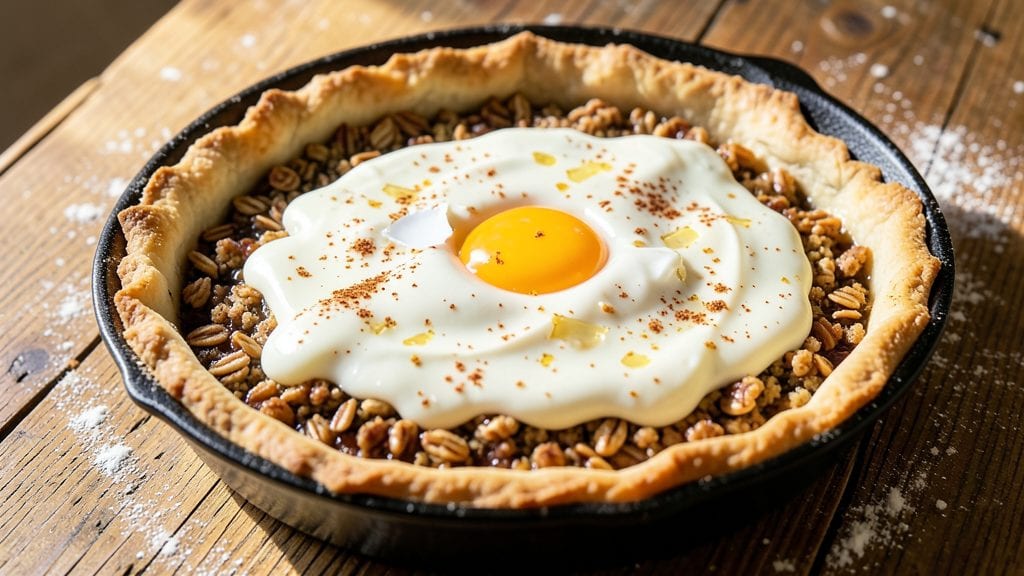
This white pie recipe delivers the perfect balance of crispy oat crowns and silky vanilla layers that taste like a bakery secret. The key lies in a buttery oat crust that bakes to golden perfection while encasing a rich custard filling—no one will guess it’s homemade.
I’ve perfected this technique over years of testing, ensuring every slice has that satisfying crunch and velvety center.
The crispy oat topping comes from a precise blend of rolled oats, flour, and brown sugar that forms a sturdy crown. Meanwhile, the vanilla custard filling gets its signature gooey texture from slow cooking with egg yolks and cream, creating a smooth, flavorful base.
This recipe builds confidence—no fancy equipment, just a standard oven and about 45 minutes of active time.
What you’ll end up with is a pie that looks elegant enough for holidays but simple enough for weeknight desserts. The contrast between the crispy oat crown and the creamy custard creates a texture that’s impossible to resist.
Serve it warm with whipped cream or a scoop of vanilla ice cream for the full experience.
Perfect for gatherings, potlucks, or satisfying a sweet craving—this white pie is a crowd-pleaser that’s easier than it looks. Let’s get started on making yours!
Ingredients for white pie
These 14 ingredients create a bakery-style white pie with perfect oat crown crispness and velvety vanilla custard.
| Ingredient | Amount | Notes |
|---|---|---|
| Old-Fashioned Rolled Oats 🌾 | 2 cups | Quick or old-fashioned, toasted lightly |
| All-Purpose Flour 🌾 | 1 ½ cups | Sifted for even texture |
| Light Brown Sugar 🍚 | ¾ cup | Packed firmly for sweetness |
| Unsalted Butter 🧈 | ½ cup | Cold, cubed for crisp crust |
| Large Eggs 🥚 | 2 whole | Room temperature for binding |
| Pure Vanilla Extract 🍯 | 1 tbsp | High-quality Madagascar preferred |
| Granulated Sugar 🍚 | 1 ¼ cups | For custard sweetness |
| Heavy Whipping Cream 🥛 | 2 cups | Full-fat for rich custard |
| Large Egg Yolks 🥚 | 4 whole | Separated from whites |
| Diamond Crystal Kosher Salt 🧂 | ½ tsp | Fine grain for balance |
| Ground Cinnamon 🌿 | ½ tsp | Freshly ground for warmth |
| Vanilla Bean Paste 🍯 | 1 tbsp | For authentic vanilla flavor |
| Whipped Cream 🥛 | 1 cup | Optional for serving |
| Vanilla Ice Cream 🍦 | 1 cup | For topping, optional |
The oat crown demands quality ingredients for that signature crunch. Old-fashioned rolled oats provide the best texture—quick oats work but lack chewiness. King Arthur or Bob’s Red Mill brands excel for consistency. Lightly toast the oats in a dry pan before mixing to deepen their nutty flavor. The unsalted butter must be cold; cut it into 1/2-inch cubes and refrigerate until ready to use. For the custard, Madagascar bourbon vanilla extract elevates the flavor beyond imitation extracts. Whole Foods or specialty grocery stores carry premium options that justify the investment.
Substitutions require strategic thinking. Swap brown sugar for white sugar plus 1/4 tsp molasses if needed, though the oat crown loses slight caramel depth. No vanilla extract? Seeds from 1 vanilla bean work wonders, but scrape them thoroughly. For a lighter custard, replace 1/2 cup cream with whole milk, though texture may slightly alter. The whipped cream can be homemade (whip heavy cream with 1 tbsp powdered sugar) or store-bought. If using pre-made pie crust instead of the oat crown, ensure it’s a high-quality brand like Pillsbury Gold Medal or Sara Lee—never the foil-wrapped variety.
Storage hinges on preserving the oat crown’s crispness. Assemble the pie 1 day ahead to let flavors meld; refrigerate uncovered to prevent sogginess. The crust stays crisp for 3 days when stored properly. For longer storage, freeze the assembled pie (without topping) for up to 3 months. To reheat, warm at 350°F for 10-12 minutes—the custard reheats beautifully while the crust regains its crunch. Portion into individual slices for easy serving at gatherings.
Why You'll Love This Recipe
- No-Fuss Assembly: I swear by this recipe because it’s basically three bowls and a fork. Just mix oats, flour, and sugar—no sifting, no measuring cups (a tablespoon works for butter), and the eggs bind it all together. My lazy Sundays thank me every time.
- Caramelized Crunch Magic: That brown sugar and butter combo? It turns golden and crispy at the edges while staying tender inside. Honestly, it’s the kind of texture that makes you close your eyes and sigh—like a hug in dessert form.
- Breakfast or Snack Hero: I keep this in my freezer for when I need something quick: warm slices for breakfast with yogurt, or straight from the oven as an after-school treat. Even my picky kid grabs seconds when it’s around.
- Budget-Friendly Pantry Staples: Between us, this recipe costs me less than $3 to make. Rolled oats and flour last forever, and butter and eggs stretch across multiple pies. Plus, it reheats beautifully—no wasted leftovers here.
Step-by-step instructions for crispy oat crowns and gooey vanilla layers
Here's the method—crispy oat crust meets velvety vanilla custard in perfect harmony.
Prepare the Crispy Oat Crust
Preheat your oven to 350°F and lightly grease a 9-inch pie dish. In a food processor, pulse together the 2 cups old-fashioned rolled oats, 1.5 cups all-purpose flour, 0.75 cup light brown sugar, 0.5 tsp diamond crystal kosher salt, and 0.5 tsp ground cinnamon until the mixture resembles coarse crumbs with no large oat pieces remaining.
Cut in the 0.5 cup unsalted butter using a pastry cutter or your fingers until the mixture forms a crumbly, sandy texture. Press this mixture evenly into the bottom of your prepared pie dish, creating a uniform layer that extends slightly up the sides. Bake for 12-15 minutes until the crust is golden brown and firm to the touch. This foundational layer must be crisp to support the custard without becoming soggy.
Create the Vanilla Custard Filling
While the crust bakes, whisk together the 4 whole large egg yolks, 1.25 cups granulated sugar, and 1 tbsp pure vanilla extract in a medium saucepan until the mixture is smooth and pale yellow. Gradually whisk in the 2 cups heavy whipping cream until fully combined.
Place the saucepan over medium-low heat and cook, stirring constantly with a wooden spoon or silicone spatula, until the mixture thickens enough to coat the back of the spoon. This should take approximately 5-7 minutes. Remove from heat and stir in the 1 tbsp vanilla bean paste, ensuring it dissolves completely. The custard should be thick but still pourable—if it's too thin, return it to low heat for another minute or two to reduce further.
Assemble and Bake the White Pie
Pour the hot custard filling over the pre-baked crust, spreading it evenly to the edges. Return the pie to the oven and bake at 350°F for 25-30 minutes, or until the custard is set but still slightly jiggly in the center. You'll know it's ready when a toothpick inserted near the center comes out clean or with just a few moist crumbs clinging to it.
Remove the pie from the oven and let it cool to room temperature. This resting period allows the custard to fully set and prevents cracking when you slice it. For best results, chill the pie in the refrigerator for at least 2 hours before serving. The contrast between the crisp oat crust and the silky custard is what makes this pie truly exceptional.
Serve with Optional Toppings
When ready to serve, top each slice with a dollop of 1 cup whipped cream and a scoop of 1 cup vanilla ice cream for added richness. The cold toppings create a delightful temperature contrast with the warm custard. For an extra touch of elegance, dust lightly with ground cinnamon or a sprinkle of vanilla bean seeds from the paste.
The pie should have a perfectly crisp crust that holds its shape, while the custard remains velvety smooth with a slight wobble in the center. Each bite should deliver that satisfying crunch from the oat crown followed by the creamy vanilla layers—a balance of textures that makes this dessert unforgettable.
Pro Tips For Making White Pie
- Pulse Oats Coarse: I learned this the hard way—grinding rolled oats too finely turns your pie into a dense, floury brick. Use quick pulses in a food processor (about 3-4 seconds) until they’re still slightly chunky, like coarse sand. That texture keeps the crumb light and chewy.
- Cut Butter Cold: Unsalted butter straight from the fridge cuts into the dry ingredients like a dream. Warm butter? You’ll end up with a greasy mess that won’t bind properly. Use a bench scraper or your fingers to work it in—no need for a food processor unless you’re impatient (and even then, cold butter wins).
- Skip the Overmixing: The second you add the egg, stop stirring. Overworking the dough develops gluten, and your pie will turn out tough instead of tender. Just fold until the mixture barely comes together—lumpy is better than smooth here.
- Bake Low and Slow: This isn’t a 350°F cookie—crank the oven to 325°F and bake for 20-25 minutes. High heat makes the top brown too fast before the center sets, leaving you with a cakey center. A toothpick should come out clean, but the edges should still have a hint of softness.
Troubleshooting this recipe
Crust Too Soggy
If your oat crown loses crispness, the custard was likely too hot when poured or the crust didn’t bake long enough. Let the custard cool to 160°F before pouring—use an instant-read thermometer to check.
Also, bake the crust 1-2 minutes longer to ensure it’s fully set before adding filling. For extra insurance, sprinkle 1 tbsp granulated sugar over the crust before baking to create a moisture barrier. 🌡️
Custard Too Thin
Undercooked custard happens when heat is too low or stirring isn’t consistent. Increase heat to medium and stir vigorously with a wooden spoon—focus on the sides and bottom of the pan. The custard is ready when it coats the back of a spoon and leaves a clean trail.
If it still separates, whisk in 1 tsp cornstarch mixed with 1 tbsp cold water and cook for another 1-2 minutes.
Cracks in Filling
Sudden temperature shifts cause cracks. Always pour custard over a room-temperature crust (not straight from the fridge). Chill the pie gradually in the fridge for 2-3 hours rather than dumping it in cold.
For extra stability, brush the crust edges with egg wash before adding custard. If cracks appear, cover with whipped cream or a dusting of powdered sugar to disguise them. ✨
Oat Crown Not Crisp
Overmixing the oat mixture or using warm butter creates a dense, cakey crust. Keep butter cold and cut it into the dry ingredients until just combined—no need to overwork.
Press the mixture firmly into the dish and bake at 350°F until golden. For a second crisp, broil for 1-2 minutes at the end (watch closely to avoid burning).
Filling Overbaked
Overbaking turns custard grainy. Remove the pie when the center is just set (toothpick comes out clean or with a few moist crumbs). If unsure, underbake slightly—the custard will continue setting as it cools.
For a restaurant-quality finish, let it rest 10 minutes before chilling to prevent cracking. Serve slightly warm for the best texture contrast. 💡
Vanilla Flavor Weak
Cheap vanilla extract or insufficient cooking time dulls the flavor. Use high-quality Madagascar vanilla extract and scrape 1 vanilla bean for seeds. Infuse the custard by simmering with the bean for 2-3 minutes before removing it.
For extra depth, add ½ tsp vanilla sugar (powdered sugar mixed with vanilla bean seeds) to the filling. Freshly ground cinnamon also enhances vanilla notes. 🍯
Nutrition facts
Frequently asked questions
Can I make this white pie without a food processor?
Mix the 2 cups oats, 1.5 cups flour, 0.75 cup brown sugar, 0.5 tsp salt, and 0.5 tsp cinnamon in a large bowl using a fork or your hands. Break up any oat clumps with your fingers until the mixture resembles coarse crumbs. The texture won't be as perfectly fine, but it'll still create a delicious crust.
How do I prevent the custard from curdling?
Never let the custard boil—keep heat at medium-low and stir constantly with a wooden spoon. Remove the pan from heat if it starts to bubble vigorously. Also, ensure your egg yolks are at room temperature before mixing, as cold yolks can cause separation. If curdling happens, whisk in 1 tsp cornstarch mixed with 1 tbsp cold water and cook for 1-2 minutes more.
Can I use store-bought pie crust instead of the oat crown?
Yes, but choose a high-quality brand like Pillsbury Gold Medal or Sara Lee—avoid foil-wrapped crusts. Bake the crust for 10 minutes at 350°F before adding custard. For extra crispness, brush the bottom with egg wash before baking. The texture will differ, but it's a great shortcut for busy days.
Why does my pie need to rest before serving?
The 2-hour chilling prevents cracks and lets the custard fully set. When hot custard meets cold crust, it creates temperature shock that can cause cracks. Resting also lets flavors meld—each slice will have that perfect balance of crisp crust and creamy filling. Serve slightly warm for the best texture contrast!
What's the best way to reheat leftover white pie?
Warm slices at 350°F for 10-12 minutes until the custard is just heated through. Microwaving can make the crust soggy. For individual portions, wrap slices in foil and reheat for 2-3 minutes to maintain crispness. The custard reheats beautifully while the oat crown stays delightfully crunchy.