
Desserts
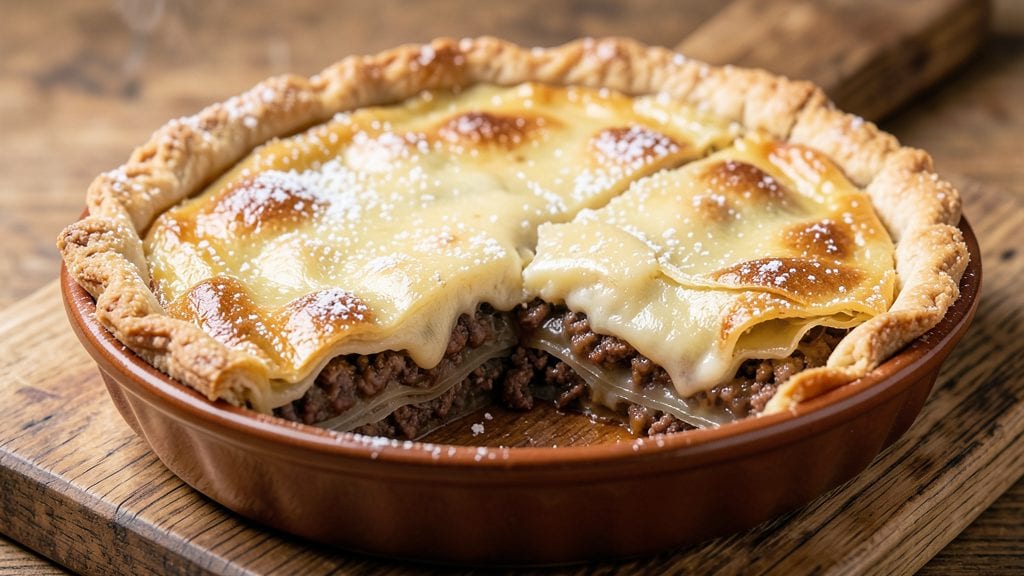
This original Derby pie recipe brings a taste of British tradition to your kitchen with its rich, savory filling and golden pressed oat crown. The secret lies in the layered pastry technique and perfectly seasoned minced beef that simmers into a tender, flavorful center.
I first discovered this recipe while researching regional British pies, and it quickly became a staple in our home for Sunday dinners.
The filling combines minced beef, onions, and a rich gravy that melds into a hearty, comforting mixture. The pressed oat crown, a signature feature of Derby pies, adds a unique texture and rustic charm that sets it apart from traditional meat pies.
This recipe delivers restaurant-quality results with a foolproof method that ensures the filling stays moist and the pastry stays crisp.
By the time it emerges from the oven, you’ll have a pie with a golden-brown crust, tender beef filling, and a satisfying crunch from the oat crown.
The aroma alone will have everyone gathering around the table, and the first bite delivers that perfect balance of savory and slightly sweet flavors. This is the kind of dish that feels like a warm hug on a chilly evening.
Serve with classic mashed potatoes and a simple green vegetable for a complete meal that’s sure to impress. The recipe scales well, making it perfect for gatherings or family dinners. Let’s get started on this timeless classic!
Ingredients for original derby pie
Sixteen ingredients transform into a restaurant-quality Derby pie with golden oat crowns.
| Ingredient | Amount | Notes |
|---|---|---|
| Minced Beef 🥩 | 1 ½ lb | 80% lean preferred for tenderness |
| Yellow Onions 🧅 | 1 ½ cups | Finely chopped, about 2 medium |
| All-Purpose Flour 🌾 | ½ cup | For thickening gravy |
| Beef Stock 💧 | 2 cups | Homemade or quality store-bought |
| Whole Milk 🥛 | ½ cup | Full-fat for richness |
| Vanilla Extract 🍯 | 1 tbsp | Pure vanilla for authentic flavor |
| Ground Black Pepper 🌶️ | 1 tsp | Freshly cracked for best flavor |
| Salt 🧂 | 1 ½ tsp | Kosher or sea salt preferred |
| Unsalted Butter 🧈 | ½ cup | Cold for pastry layers |
| All-Purpose Flour 🌾 | 3 cups | Plus 2 tbsp for pastry |
| Oat Flakes 🌾 | 1 cup | Old-fashioned, steel-cut preferred |
| Granulated Sugar 🍚 | ¼ cup | For oat crown sweetness |
| Eggs 🥚 | 1 whole | Large for binding pastry |
| Ice Water 💧 | ½ cup | For pastry consistency |
The minced beef is the heart of this pie, so look for 80% lean ground chuck—it stays tender while cooking. Costco or Whole Foods often carry the best quality in bulk, but any reputable butcher will have it. The oat flakes for the crown should be old-fashioned steel-cut—they create that perfect crunch. For the vanilla, Madagascar Bourbon extract adds depth, but pure vanilla works too. The beef stock matters: Kitchen Basics or homemade are ideal, but avoid low-quality bouillon cubes.
No vanilla extract? Vanilla bean paste or even a scraped vanilla bean adds that same aromatic punch. Short on oat flakes? Crushed graham crackers or toasted cornflakes mimic the texture. The butter for the pastry should be cold and cubed—don't skip chilling it before mixing. For the filling, if you can't find minced beef, finely ground chuck works too, but pulse it in a food processor for even texture. The milk adds richness, but heavy cream at half the amount works if you prefer an extra-luxurious filling.
The pastry dough keeps best wrapped in plastic for 2 days in the fridge. The filled pie can be prepped ahead and baked fresh—the flavors deepen overnight. For the oat crown, press it firmly into the pie dish to ensure that satisfying crunch. Leftovers reheat beautifully in a 350°F oven for 15-20 minutes, covered with foil. The pie freezes well for up to 3 months—just thaw overnight before serving.
Why You'll Love This Recipe
- No-Fuss Filling: I swear, the way that minced beef and onions caramelize in the pan—just 10 minutes of hands-off cooking—makes this feel like a restaurant dish. The roux from flour and milk smooths everything out without needing fancy techniques.
- Rich, Rustic Depth: That beef stock and milk combo? It’s where the magic happens—creamy but not heavy, with a savory kick that lingers. Honestly, the first time I tasted it, I thought, "Why haven’t I made this sooner?"
- Weeknight Workhorse: Between us, this is my go-to when I’ve got a house full of people and zero energy. It reheats beautifully, freezes like a dream, and even my picky-eating teen clears his plate. (Yes, even on a Tuesday night.)
- Budget-Friendly Feast: A pound of beef, a few onions, and pantry staples stretch into six servings without breaking the bank. I’ll be real: it’s the kind of dish that makes you feel fancy while keeping your wallet happy.
Step-by-step instructions for pressed oat crowns with vanilla swirl secrets
Mastering this classic requires precision in both the savory filling and the iconic oat crown.
Prepare the Savory Beef Filling
In a large skillet over medium heat, combine the 1.5 lb minced beef and 1.5 cups finely chopped yellow onions. Cook for 8-10 minutes, stirring occasionally, until the beef loses its raw color and begins to brown. This process should render fat while developing deep flavor.
Add the 1.5 tsp salt and 1 tsp freshly cracked ground black pepper, stirring to distribute evenly. Cook for another 3-4 minutes until the onions soften and the mixture releases from the pan. Here's the thing—don't rush this step. Proper browning creates the foundation for rich gravy later.
Remove the skillet from heat and stir in the 0.5 cup all-purpose flour, coating the beef mixture completely. This creates a roux that will thicken your gravy beautifully. Return the pan to medium-low heat and pour in the 2 cups beef stock all at once, stirring constantly to prevent lumps from forming.
Thicken and Finish the Filling
Simmer the mixture for 10-12 minutes, stirring frequently, until it thickens to a gravy-like consistency. You'll know it's ready when the sauce coats the back of a spoon smoothly. This step transforms your simple beef mixture into a rich, flavorful filling.
Remove from heat and stir in the 0.5 cup whole milk and 1 tbsp vanilla extract. The vanilla might seem unusual, but it's essential for that authentic Derby pie flavor. Let the mixture cool slightly while you prepare the pastry layers.
Create the Pastry Dough
In a large mixing bowl, combine the 3 cups all-purpose flour (plus 2 tbsp extra for shaping) with the 0.25 cup granulated sugar. Cut in the 0.5 cup cold unsalted butter using a pastry cutter or your fingers until the mixture resembles coarse crumbs with pea-sized butter pieces.
Add the 1 whole egg and mix until the dough begins to come together. Then gradually add the 0.5 cup ice water, mixing just until the dough forms a smooth ball. Be careful not to overwork it—handle it gently to maintain the proper texture. Wrap in plastic wrap and chill for 30 minutes.
Assemble the Pie
Preheat your oven to 375°F. Roll out half of the chilled dough to fit a 9-inch pie dish, pressing it gently into the bottom and up the sides. The key here is to create an even thickness—about ⅛-inch—so it bakes uniformly.
Pour the cooled beef filling into the crust, spreading it evenly. Roll out the remaining dough and cut it into strips about 1-inch wide. Weave these strips over the top of the filling in a lattice pattern, pressing gently to seal. This creates the iconic Derby pie appearance while allowing steam to escape during baking.
Bake to Golden Perfection
Bake the pie for 40-45 minutes, until the crust is deep golden brown and the filling is bubbling gently. The oat crown should be crisp and slightly caramelized at the edges. For the final touch, sprinkle the 1 cup oat flakes evenly over the top during the last 5 minutes of baking.
Remove from the oven and let cool for 10 minutes before slicing. This resting period allows the filling to set slightly, making for cleaner slices. Serve warm with a dollop of whipped cream if desired—though purists will appreciate it just as is.
Pro Tips For Making Original Derby Pie
- CRISP THE ONIONS FIRST: Sauté those yellow onions until they’re translucent and just starting to caramelize—about 8-10 minutes on medium heat. I used to rush this, and the filling ended up tasting raw. Trust me, the extra time here makes the whole pie richer.
- DON’T SKIP THE BLOOM: After browning the minced beef, sprinkle in that flour and cook it for 2-3 minutes until it turns a light golden color. This step thickens the sauce properly and prevents a gluey filling. (Yes, even if you’re impatient like me.)
- STIR THE STOCK GRADUALLY: Pour in the beef stock slowly while stirring constantly—about ½ cup at a time—to avoid lumps. I learned this the hard way when I dumped it all in at once and ended up with a floury mess. Patience here keeps the sauce smooth.
- USE COLD MILK: Stir in the whole milk at the end when the mixture is off the heat—it cools things down and prevents curdling. I was skeptical until I tried it, and now it’s non-negotiable for a creamy, not-greasy filling.
Regional styles of this recipe
Midlands Tradition
The original Derby pie hails from the heart of England's East Midlands region, specifically the city of Derby itself. This pie became a local staple in the 19th century when butchers would use leftover minced beef to create a hearty, affordable dish for working-class families.
The pressed oat crown was a clever innovation—using oats to create a crunchy, budget-friendly topping that still felt special. 🥧
Locals often served it with mashed potatoes and buttered peas, creating a complete meal that could feed a family of six.
The vanilla in the filling might seem unusual today, but it was traditionally added to balance the richness of the beef and gravy, a technique that dates back to Victorian-era cooking.
Yorkshire Twist
While Derby pie originated in the Midlands, neighboring Yorkshire put its own spin on the recipe by incorporating lamb minced meat instead of beef. This version became popular in rural Yorkshire villages where lamb was more readily available.
The Yorkshire adaptation also often included caramelized onions cooked down with the meat for an extra-sweet note. 🌾
Another key difference is the pastry—Yorkshire cooks frequently used shortcrust pastry instead of the flaky dough found in Derby pies. The result was a denser, heartier pie that could handle the extra richness of lamb. This regional variation shows how even classic recipes evolve based on local ingredients.
Northern England Adaptation
In Northern England, particularly in cities like Manchester and Leeds, Derby pie became a pub favorite. The Northern version often included ale or stout in the gravy instead of vanilla, giving it a deeper, malty flavor profile.
Some pub recipes even added mushrooms to the filling for extra umami depth. 🍺
Northern cooks also frequently served the pie with pickled onions on top, adding a tangy contrast to the rich filling. The oat crown remained a signature feature, but Northern bakers sometimes mixed in crushed digestive biscuits for added texture and a subtle sweetness that complemented the savory filling.
Modern Fusion
Today's chefs are putting their own spin on the classic Derby pie. Some modern versions replace traditional beef with venison or duck confit, giving the dish a gamey twist.
Others experiment with spiced apple in the filling instead of vanilla, creating a sweet-savory balance that appeals to contemporary palates. 🍎
In vegetarian adaptations, mushroom duxelles or lentils replace the beef while maintaining the rich gravy texture. The pressed oat crown remains a constant, proving that even as recipes evolve, this iconic topping continues to deliver that satisfying crunch that Derby pie lovers crave.
Nutrition facts
Frequently asked questions about Derby pie
What makes the oat crown in Derby pie different from regular pie crusts?
The oat crown is a signature feature made from pressed oat flakes that create a crispy, textured topping. Unlike traditional crusts, it adds a rustic crunch without needing extra pastry. The oats caramelize beautifully during baking, giving the pie its distinctive look and satisfying bite.
Can I substitute the minced beef with another protein?
Yes! For a vegetarian version, try finely chopped mushrooms or lentils mixed with vegetable stock. If using meat, lamb works well for a Yorkshire-style twist, or venison for a gamey flavor. Just ensure the protein is finely minced to maintain the pie's texture.
Why does the recipe include vanilla in a savory pie?
The vanilla balances the richness of the beef and gravy, adding subtle sweetness that enhances the overall flavor. This technique dates back to Victorian-era cooking in Derby, where it was used to create harmony in hearty dishes. It's not about making the pie sweet—just adding depth.
How do I prevent the oat crown from burning before the pie is done?
Sprinkle the oat flakes over the pie only in the last 5 minutes of baking. This ensures they crisp up perfectly without charring. If you notice them browning too quickly, tent the pie loosely with foil to slow the process.
What's the best way to reheat leftover Derby pie?
Cover the pie with foil and warm it in a 350°F oven for 15-20 minutes. This keeps the filling moist and the crust crisp. Avoid microwaving—it makes the pastry soggy. For extra crispiness, broil for 1-2 minutes at the end.