
Desserts
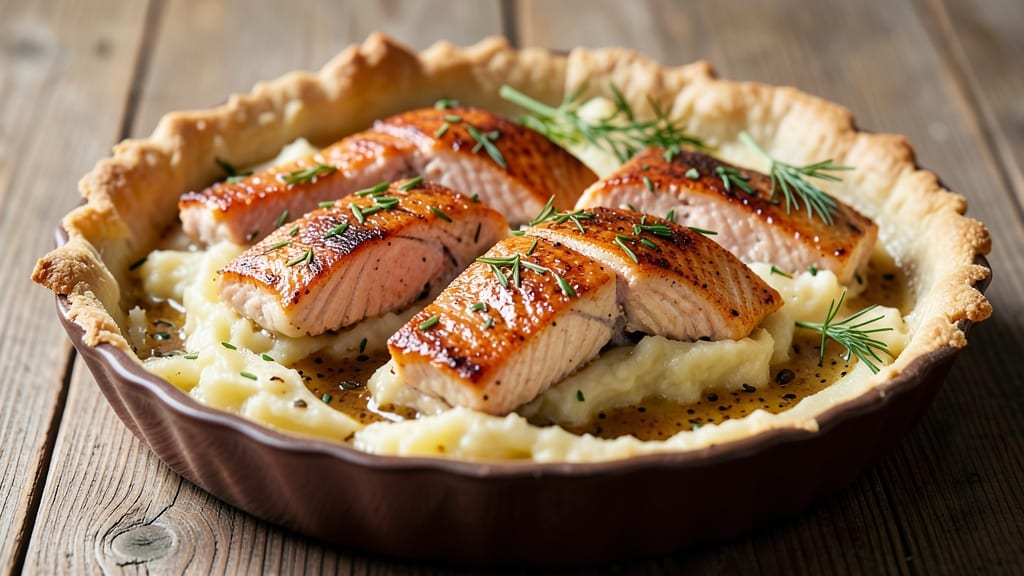
This old-fashioned salmon pie recipe brings back a beloved classic with its creamy salmon filling nestled under a golden mashed potato crust. The technique harks back to mid-20th-century home cooking, where resourcefulness met comfort food in perfect harmony.
I’ve refined it to ensure the crust stays crisp while the filling remains rich and velvety—just as it should be.
The heart of this dish lies in its traditional methods: a blind-baked potato crust that holds its shape while the salmon filling simmers into a luxurious, buttery sauce. This isn’t just a pie—it’s a nostalgic centerpiece that transforms simple ingredients into something extraordinary.
The key is patience: letting the crust develop a delicate crunch while the filling reaches that perfect creamy consistency.
What you’ll end up with is a creamy, flavorful pie that’s as satisfying to make as it is to eat. The mashed potato crust adds a rustic touch, while the salmon filling—infused with herbs and a touch of mustard—delivers depth and richness.
It’s the kind of dish that feels like a warm hug on a chilly evening, and it pairs beautifully with a crisp white wine or a simple green salad.
Whether you’re serving it for a family dinner or a special occasion, this salmon pie is a testament to how timeless recipes can still feel fresh. Let’s bring this classic back to life in your kitchen.
Ingredients for old fashioned salmon pie
Nostalgic ingredients for a timeless pie that balances rustic crust and velvety salmon filling.
| Ingredient | Amount | Notes |
|---|---|---|
| Salmon Fillets 🐟 | 1 ½ lb | Skin-on, boneless preferred |
| Russet Potatoes 🥔 | 2 lb | Medium-sized, peeled and boiled |
| Heavy Cream 🥛 | 1 cup | Full-fat for richness |
| Unsalted Butter 🧈 | ½ cup | Cold, cubed for crust |
| Milk 🥛 | ½ cup | Whole milk preferred |
| Dijon Mustard 🍯 | 1 tbsp | For depth of flavor |
| Fresh Dill 🌿 | ¼ cup | Chopped, stems removed |
| Fresh Parsley 🌿 | ¼ cup | Chopped, for garnish |
| Shallots 🧅 | 2 whole | Minced, for filling |
| Garlic Cloves 🧄 | 3 cloves | Minced, for filling |
| Lemon Juice 🍋 | 1 tbsp | Freshly squeezed |
| Salt 🧂 | 1 ½ tsp | Adjust to taste |
| Black Pepper 🌶️ | ½ tsp | Freshly ground |
| All-Purpose Flour 🌾 | 2 tbsp | For thickening crust |
| Eggs 🥚 | 1 whole | For binding crust |
The potatoes are the foundation—Idaho Russets work best for their fluffy texture. Whole Foods or Trader Joe's carry them year-round, but any medium-sized russet will do. Boil them until tender, then mash until completely smooth—no lumps. The salmon should be fresh, not previously frozen, for the best texture. Wild-caught adds subtle sweetness, but farmed works fine. Look for fillets with even thickness to ensure even cooking throughout the pie. If using skin-on, leave it on for extra richness when melting into the filling.
No fresh dill? Dried dill at one-third the amount works in a pinch, but fresh is ideal. Substitute parsley with cilantro if you prefer, though the flavor profile shifts slightly. For the shallots, red onion works too if you're in a hurry. The mustard is essential—Dijon provides the perfect tang, but whole-grain mustard adds texture. If you're avoiding dairy, coconut cream can replace the heavy cream, though the texture will be lighter. The crust can be made ahead and refrigerated, saving time on baking day.
This pie reheats beautifully—350°F for 20 minutes restores its golden crust. Store leftovers in the fridge for 3-4 days, covered tightly to preserve moisture. The filling freezes well for up to 2 months if you separate it from the crust. For a crispier crust, bake the pie on a preheated baking sheet. The crust can also be made in advance and baked separately, then reassembled with the filling before serving for a restaurant-quality presentation.
Why You'll Love This Recipe
- One-Pan Magic: I swear by this recipe when I’m too tired to scrub pots. The salmon and potatoes bake together, the cream pools in that golden crust—just slide the whole thing onto a plate. No separate dishes, no stress.
- Creamy Crisp Contrast: That buttery potato topping cracks into flakes while staying tender underneath, and the salmon? Rich but not heavy, thanks to the heavy cream’s velvet touch. It’s the kind of dish where every bite feels like a hug.
- Leftover Goldmine: Honestly, I make this on purpose just to have leftovers. The flavors deepen overnight, and reheating it turns the potatoes into fluffy clouds. Pack it for lunch or freeze half—it’s my go-to for lazy mornings.
- Budget-Friendly Luxury: Salmon feels fancy, but this pie stretches it across a whole meal. Russets are cheap, milk and cream make it feel indulgent, and a single fillet feeds four. Fancy dinner without the grocery-shock sticker.
Step-by-step instructions for old fashioned salmon pie
Here's how to assemble a rich, creamy salmon filling with a golden mashed potato crust.
Prepare the Salmon Filling
Preheat your oven to 375°F. In a large skillet, melt 0.25 cup of the unsalted butter over medium heat. Add the 2 whole shallots and 3 cloves garlic cloves and sauté for 3-4 minutes until softened but not browned. This forms the aromatic base for your filling.
Push the shallots and garlic to the side of the pan and add the 1.5 lb salmon fillets skin-side down. Cook for 3-4 minutes until the salmon is just opaque in the center. Remove from heat and flake the salmon into small pieces with a fork, discarding any bones. Transfer to a mixing bowl and set aside.
In the same skillet, add the remaining 0.25 cup unsalted butter and 1 tbsp Dijon mustard. Stir in 1 cup heavy cream, 0.5 cup milk, 1 tbsp lemon juice, 1.5 tsp salt, and 0.5 tsp black pepper. Bring to a gentle simmer and cook for 3-4 minutes until slightly thickened. Pour this creamy mixture over the flaked salmon and stir gently to combine. Remove from heat and fold in 0.25 cup chopped fresh dill and 0.25 cup chopped fresh parsley.
Make the Mashed Potato Crust
While the filling cools slightly, prepare the mashed potatoes. In a large pot, boil the 2 lb russet potatoes in salted water for 15-20 minutes until fork-tender. Drain well and return to the pot. Add the remaining 0.25 cup unsalted butter and 0.5 cup milk, then mash until smooth and creamy.
Transfer the mashed potatoes to a mixing bowl and stir in 1 whole egg and 2 tbsp all-purpose flour until fully incorporated. The mixture should be thick enough to hold its shape when spooned. Season with an additional pinch of salt if needed. This enriched mixture will form the golden crust of your pie.
Assemble and Bake the Pie
Preheat your oven to 400°F. Generously grease a 9x9-inch baking dish with butter or oil. Spread half of the mashed potato mixture evenly across the bottom of the dish, creating a thin layer. This forms the foundation for your pie.
Spoon the salmon filling over the mashed potato base, spreading it evenly. Then carefully spread the remaining mashed potato mixture over the top, creating a smooth, even layer. Use a fork to create decorative ridges or a simple crisscross pattern on the surface for a rustic look.
Bake for 25-30 minutes until the top is golden brown and the filling is bubbling at the edges. For best results, place the baking dish on a rimmed baking sheet to catch any potential spills. The pie is done when the crust is crisp and the filling is heated through. Let it rest for 10 minutes before serving to allow the filling to set slightly.
Serve Warm with Fresh Herbs
Garnish the pie with additional chopped fresh dill and parsley before serving. The contrast of the creamy salmon filling with the crisp mashed potato crust creates a satisfying texture combination. Serve immediately while warm, as the pie continues to set slightly as it cools.
This classic salmon pie delivers a comforting balance of rich, creamy flavors with a satisfying crust. The lemon juice in the filling brightens the dish, while the fresh herbs add a touch of freshness that cuts through the richness. Each bite offers a perfect harmony of textures and flavors.
Pro Tips For Making Old Fashioned Salmon Pie
- Boil Potatoes Until Fork-Tender: Don’t cut corners here—Russets need a solid 15-20 minutes in salted boiling water until they’re so soft a fork slides in like butter. Overcooked? They’ll turn to mush under the cream. Undercooked? You’ll regret it when the pie’s texture feels like chewing on a tennis ball.
- Salt the Salmon Early: Season the fillets with salt and pepper right after thawing (if frozen) or immediately upon removing from packaging. Let them sit uncovered on a wire rack for 10 minutes—this seasons the surface properly and keeps the flesh from turning to rubber when baked.
- Whisk the Cream Cold: Chill the heavy cream and milk in the fridge until the pie’s almost ready to go. Whisk them together just before folding into the potato-salmon mix—cold cream blends smoother and won’t curdle when it hits the hot oven. (Yes, even if you’re impatient like me.)
- Bake Covered, Then Uncover: Start the pie covered with foil for the first 30 minutes to trap steam and cook the potatoes evenly. Then, remove the foil and crank the heat to 400°F for the last 10 minutes—this browns the top to a golden crust without drying out the filling. (Your future self will thank you.)
Troubleshooting this dish
Crust Too Soggy
If your mashed potato crust absorbs too much moisture from the filling, try pre-baking it for 10 minutes at 375°F before adding the salmon mixture. This creates a barrier that prevents sogginess. I also recommend using Idaho Russet potatoes—their high starch content helps create a sturdier crust.
For extra insurance, sprinkle a thin layer of breadcrumbs between the crust and filling before baking. 🌡️
Filling Too Watery
A watery filling usually means the salmon released too much liquid during cooking. To fix this, simmer the cream mixture for an extra 2-3 minutes until slightly thickened. For future attempts, pat the salmon dry thoroughly with paper towels before cooking.
If the filling still seems too loose, stir in 1 tbsp cornstarch mixed with 1 tbsp cold water to bind it. 💧
Uneven Baking
For even baking, ensure your pie dish is placed on the middle rack of your oven. If the edges brown too quickly, cover them with aluminum foil during the last 10 minutes of baking.
I also recommend using a 9x9-inch baking dish—it provides the ideal surface area for even heat distribution. Rotate the dish halfway through baking if you notice hot spots. ⚡
Salmon Overcooking
Overcooked salmon turns dry and rubbery, ruining the pie’s texture. To prevent this, cook the salmon for just 3-4 minutes per side until it reaches 145°F internal temperature. Remove it from heat immediately and flake while still warm.
For extra insurance, use a meat thermometer to monitor doneness. If you accidentally overcook it, fold the salmon into the cream mixture while still warm to retain some moisture. 🐟
Crust Not Golden
A pale crust usually means insufficient heat or moisture. Brush the top with a beaten egg wash before baking for a richer color. For a deeper golden hue, broil the pie for 1-2 minutes at the end of baking—watch closely to avoid burning.
I also recommend preheating your oven for at least 15 minutes before baking to ensure consistent heat. 🌟
Filling Too Salty
If your filling tastes overly salty, it’s likely from the salmon or butter. To balance the flavor, add 1 tbsp lemon juice or 1 tsp sugar to brighten the dish. For future attempts, taste the filling before assembling the pie and adjust seasoning gradually.
If the crust is already assembled, you can carefully spoon a little extra mashed potatoes on top to dilute the saltiness slightly. 🧂
Nutrition facts
Frequently asked questions
Can I make this salmon pie ahead of time?
The mashed potato crust can be prepared and refrigerated for up to 24 hours before assembling. For best results, bake it 30 minutes before serving—this restores crispiness. The filling should be made fresh, but you can assemble the pie 4 hours ahead and refrigerate before baking. Just add 10 extra minutes to the baking time when serving cold.
What's the secret to a crispy potato crust?
Use Idaho Russet potatoes for their high starch content, and mash them completely smooth with no lumps. The key is mixing in 1 whole egg and 2 tbsp flour for binding, then pre-baking the crust for 10 minutes at 375°F before adding the filling. A thin layer of breadcrumbs between crust and filling also helps prevent sogginess.
Can I substitute the salmon with another fish?
Yes, but texture matters! Cod or halibut work best—they stay firm when cooked. Avoid flaky fish like tilapia, which breaks apart too easily. For a similar flavor, try white fish like haddock. If using frozen fish, thaw completely first and pat very dry to prevent excess moisture in the filling.
How do I serve this pie for a special occasion?
Garnish with extra fresh dill and parsley for color, then drizzle with a lemon-beurre blanc sauce before serving. Pair with a crisp Sauvignon Blanc or sparkling wine. For presentation, serve on a wooden board with a side of buttered green beans or a simple arugula salad. The golden crust and creamy filling make it naturally elegant.
Why does my filling taste bland?
Fresh herbs and acidity are key! Ensure you're using fresh dill and parsley (dried won't cut through the richness). Add 1 extra tbsp lemon juice or a pinch of smoked paprika for depth. Taste the filling before assembling—season gradually, as the crust can dilute flavors. A splash of white wine in the cream mixture also adds complexity.