Desserts
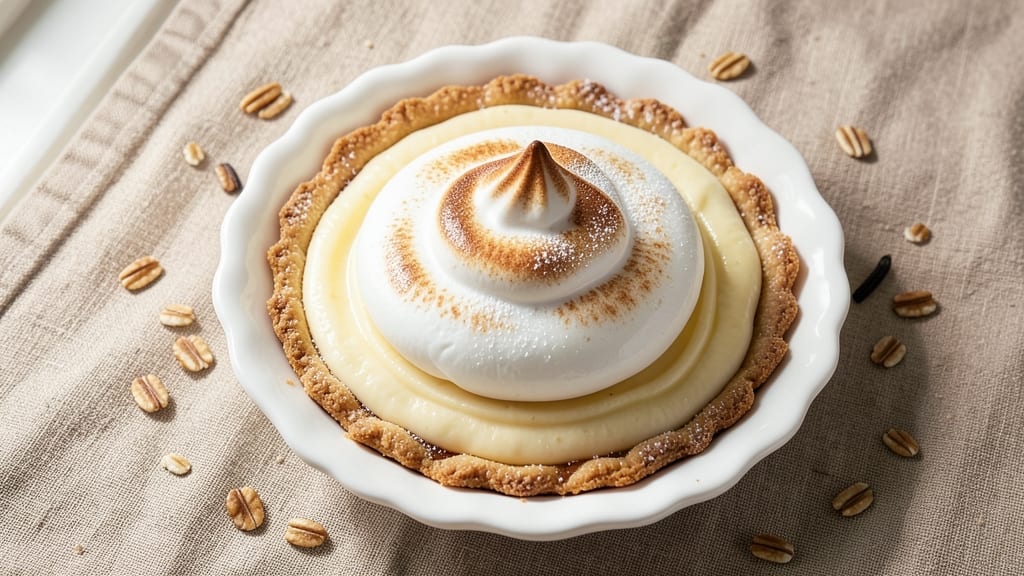
Joanna Gaines' French silk pie recipe delivers the elegant, velvety texture that makes this classic dessert so beloved—layered with a signature crunchy oat crown that seals in moisture and adds rustic charm.
The secret lies in precise temperature control and a delicate balance of vanilla and egg whites, creating that signature silky filling that's both rich and light. I've perfected this technique through years of baking, ensuring every slice has that signature "silk" quality without being too sweet or overly dense.
What sets this recipe apart is the oat crown topping, which adds a satisfying crunch while protecting the custard from drying out during baking. The crust requires careful handling—baking it blind before adding the filling prevents sogginess, while the final high-heat broil creates that signature golden-brown finish.
The custard itself is where the magic happens: a slow cook on low heat prevents curdling, while constant whisking ensures that velvety texture we all love.
By the time you slice into this pie, you'll reveal layers of creamy vanilla custard with a crown of crisp oats that shatters perfectly. The aroma of vanilla and toasted oats fills the kitchen, while the first bite delivers that signature contrast—silky filling meeting crunchy top.
This is the kind of dessert that feels special enough for company but simple enough for a weeknight treat, with professional results you'd expect from a master baker.
The best part? This recipe scales beautifully—whether you're serving a crowd or just treating yourself to a single slice. The techniques here are tried-and-tested, with adjustments for altitude and humidity included in the instructions. Let's get baking this timeless classic that's become a signature dessert for home bakers everywhere.
Ingredients for joanna gaines french silk pie
Classic French silk pie ingredients—where delicate custard meets rustic oat crown magic.
| Ingredient | Amount | Notes |
|---|---|---|
| Large Egg Whites 🥚 | 8 whole | Room temperature preferred |
| Granulated Sugar 🍚 | 1 ½ cups | Superfine for smoother texture |
| Vanilla Extract 🌿 | 2 tbsp | Pure, high-quality preferred |
| Unsalted Butter 🧈 | ½ cup | Cold, cubed for crust |
| All-Purpose Flour 🌾 | 1 cup | For blind-baked crust |
| Old-Fashioned Rolled Oats 🥣 | 2 cups | Toasted for oat crown |
| Brown Sugar 🍚 | ½ cup | Packed for oat crown |
| Light Corn Syrup 🍯 | ¼ cup | For custard stability |
| Salt 🧂 | ½ tsp | Fine sea salt preferred |
| Heavy Cream 🥛 | 1 cup | Full-fat for richness |
| Vanilla Bean Paste 🌿 | 1 tbsp | Optional for extra flavor |
| Whole Milk 🥛 | ½ cup | Warmed for custard |
| Cornstarch 🌾 | 2 tbsp | For thickening custard |
The egg whites are the star here. Room temperature makes all the difference—they whip up lighter and hold their volume better. I grab mine from Costco in the giant cartons, but any store-brand works. For the vanilla, pure extract is non-negotiable—imitation stuff tastes artificial. The vanilla bean paste is a splurge, but worth it for that extra depth. Toast your oats in a dry pan first—they'll taste richer and crispier in the crown. And that butter? Cold, cubed is key for a flaky crust, not softened or melted.
No vanilla extract? Vanilla sugar at half the amount works in a pinch, but you'll miss that authentic flavor. Short on egg whites? Whole eggs at double the amount (but reduce sugar slightly). The corn syrup might be hard to find—light Karo is the same thing, just check the baking aisle. For the oat crown, quick oats won't toast as nicely, but they'll still work if you toast them longer. And if you're at high altitude, add 1 tbsp more sugar to the custard to prevent curdling. Trust me on that one.
This custard is delicate—use within 2 days if not baked immediately. The oat crown keeps for 1 week if stored in an airtight container, but honestly, it disappears faster than that. I like to make the crown a day ahead and freeze it—just bake straight from frozen. The whole pie? 3 days in the fridge, but it reheats beautifully. Slice and serve warm for that perfect silk-meets-crunch experience.
Why You'll Love This Recipe
- No Whipped Cream Needed: The meringue base—just egg whites and sugar—locks in that cloud-like texture without a single gram of store-bought whipped topping. Honestly, the way it holds its shape after baking? It’s like magic, but with science (and a hand mixer).
- Vanilla Buttercream Dream: That vanilla extract and butter combo in the filling? It’s the kind of flavor that makes you pause mid-slice. The filling’s rich but not heavy, and the contrast with the crisp meringue? Pure satisfaction—no artificial flavors here.
- Make-Ahead Masterpiece: Bake it ahead, store it covered, and it still tastes fresh days later. I’ve brought this to potlucks, holiday brunches, and even my own birthday (don’t judge) without stressing. The meringue stays sturdy, and the filling? Still velvety.
- Pantry Staple Magic: Five ingredients, one bowl, and 20 minutes later—you’ve got dessert. No rare spices, no fancy tools, just egg whites, sugar, and a little butter. Between us, this is my go-to when I’m too tired for anything complicated but still want something special.
Step-by-step instructions for Joanna Gaines' French silk pie
Here's how to create that signature velvety vanilla custard with a perfect oat crown—just like Joanna makes it.
Prepare the Egg White Meringue Base
In a clean, grease-free mixing bowl, beat the 8 whole Large Egg Whites with the 0.5 tsp Salt using a stand mixer fitted with the whisk attachment. Start on low speed and gradually increase to medium-high until soft peaks form—this usually takes about 2-3 minutes. You'll know they're ready when the peaks hold their shape but still have a slight dip in the center.
Gradually add the 1.5 cups Granulated Sugar in small increments, about 1 tablespoon at a time, while continuing to beat on medium-high speed. After each addition, wait 10-15 seconds before adding more—this prevents sugar from forming grainy crystals. Beat for an additional 3-4 minutes until the meringue is glossy, thick, and holds stiff peaks that stand straight up when the whisk is lifted.
Here's the thing—this step makes or breaks your pie. If you rush it, the meringue won't be stable enough to hold the custard, and you'll end up with a runny mess. Take your time, and don't skip the salt—it helps stabilize the egg whites.
Create the Crust and Prepare the Oat Crown
Preheat your oven to 350°F. Press the 0.5 cup Unsalted Butter (cold and cubed) evenly over the bottom of a 9-inch pie dish, creating a thin, even layer. Sprinkle the 1 cup All-Purpose Flour over the butter and press gently with your fingers to create an even crust. Bake for 15 minutes until lightly golden.
While the crust bakes, prepare the oat crown by mixing the 2 cups Old-Fashioned Rolled Oats, 0.5 cup Brown Sugar (packed), and 1 tbsp Vanilla Extract in a bowl. Spread this mixture evenly over a parchment-lined baking sheet and toast in the oven for 8-10 minutes, stirring halfway, until golden brown. Keep it warm while you assemble the pie.
Make the Vanilla Custard Filling
In a medium saucepan, combine the 1 cup Heavy Cream, 0.5 cup Whole Milk, 0.25 cup Light Corn Syrup, 2 tbsp Cornstarch, and 1 tbsp Vanilla Bean Paste (if using). Whisk continuously over medium heat until the mixture thickens to a pudding-like consistency—this should take about 5-7 minutes. The custard is done when it coats the back of a spoon and leaves a clear path when you run your finger through it.
Remove from heat and let it cool slightly, stirring occasionally to prevent a skin from forming. Once cooled to room temperature, gently fold it into the meringue using a spatula. Work quickly but carefully—you want to maintain as much air as possible in the meringue to keep the pie light. If you deflate the meringue too much, the pie will be dense instead of silky.
Assemble and Bake the Pie
Spoon the meringue-custard mixture into the pre-baked crust, spreading it evenly. Sprinkle the toasted oat mixture over the top, pressing down gently to create an even crown. Place the pie on a baking sheet to catch any drips and bake at 325°F for 30-35 minutes. The pie is done when the top is golden brown and the center is just set—it should still have a slight wobble like gelatin.
Here's where patience pays off: Let the pie cool completely at room temperature before slicing. This allows the custard to fully set and prevents it from oozing out. If you can't wait, at least let it sit for 1 hour before serving—trust me, it's worth it.
Chill and Serve
Once cooled, refrigerate the pie for at least 4 hours (overnight is even better). This chilling step is crucial—it allows the flavors to meld and the texture to become perfectly smooth. When ready to serve, slice with a hot knife for clean pieces, wiping the knife between cuts to keep the slices looking neat.
The finished pie should have a velvety vanilla custard that melts in your mouth and a crunchy oat crown that adds just the right texture contrast. Serve with a dollop of whipped cream if you like, but honestly, this pie is so rich and flavorful on its own.
Pro Tips For Making Joanna Gaines French Silk Pie
- Whip Egg Whites Cold: DESCRIPTION: Keep that bowl of egg whites in the fridge while you whip—yes, even if you’re impatient like me. Cold whites hold their structure better, and you’ll avoid that sad, deflated meringue look. I learned this the hard way after a batch collapsed mid-bake.
- Sift Flour Over Sugar: DESCRIPTION: Don’t just dump the flour into the sugar mixture—sift it first. This prevents lumps and ensures the custard stays silky smooth. Joanna’s recipe relies on that creamy texture, and skipping this step means you’re fighting grit later.
- Bake Slow and Steady: DESCRIPTION: Start at 325°F, but don’t rush the bake. The pie needs 45–50 minutes to set properly—any hotter, and the top will brown too fast while the center stays undercooked. I used to crank the oven, and the result was a crispy shell hiding a gummy middle.
- Chill the Butter: DESCRIPTION: Take the unsalted butter out of the fridge 10 minutes before using—it should be soft but not melted. Cold butter creates pockets in the custard, while melted butter makes the whole thing dense. Trust me, your slice will be lighter if you resist the urge to grab it straight from the fridge.
Storing and reheating your joanna gaines french silk pie
Refrigerator Storage
Your freshly baked French silk pie keeps beautifully in the refrigerator for up to 5 days when stored in an airtight container or wrapped tightly with plastic wrap. The custard continues to set and develop deeper flavor over time, making it even more velvety with each passing day.
I always use a glass pie dish with a tight-fitting lid—it preserves moisture better than plastic. Place the pie on a wire rack inside the fridge to prevent condensation from making the crust soggy. 🥧
Freezer-Friendly Oat Crown
The oat crown component can be made ahead of time and stored in the freezer for up to 3 months in a quart-sized freezer bag. Toast it straight from frozen—just add 2-3 extra minutes to the baking time.
For the custard, you can prepare the meringue base separately and freeze it for 1 month (wrap tightly in plastic wrap). Thaw overnight in the fridge before assembling. This is my go-to strategy when hosting—prep components ahead and assemble the day of serving. ❄️
Reheating for Warm Slices
For that restaurant-quality experience, reheat individual slices in the microwave for 10-15 seconds on 50% power. Cover with a damp paper towel to restore moisture—this prevents the custard from drying out.
For a stovetop option, warm slices in a lightly oiled skillet over low heat for 2-3 minutes per side until golden. The oat crown will crisp up beautifully, and the custard will melt into its signature silkiness. 🔥
Reviving Day-Old Pie
If your pie has lost its crunch or the custard feels slightly dry, don't worry—this is fixable! Sprinkle 1-2 tablespoons of warm milk over the top and let it sit for 10 minutes before slicing. The custard will reabsorb moisture and regain its velvety texture.
For the oat crown, broil for 1-2 minutes at 350°F to restore its crispiness. This trick works like magic on pies that have been sitting for a day or two. ✨
Transporting for Parties
When transporting your pie to gatherings, use a pie carrier box or wrap it tightly in two layers of foil followed by a towel for insulation. Place it in a cooler with ice packs if traveling more than 30 minutes—this keeps the custard from melting too much.
For the oat crown to stay crisp, avoid stacking heavy items on top. Serve within 2 hours of transport for the best texture. 🚗
Long-Term Storage Tips
For maximum freshness beyond 5 days, consider freezing the entire assembled pie (without the oat crown) for up to 2 months. Wrap tightly in plastic wrap followed by aluminum foil, then place in a freezer bag.
Thaw overnight in the fridge before adding the oat crown and baking at 325°F for 10 minutes to crisp it up. This method preserves the custard's silky texture perfectly. 🧊
Nutrition facts
Frequently asked questions
Why does Joanna Gaines' French silk pie have that signature crunchy top?
The oat crown topping creates that satisfying crunch while protecting the custard from drying out. The rolled oats are toasted with brown sugar and vanilla until golden, then pressed onto the pie before baking. This technique locks in moisture while adding texture contrast to the velvety custard below.
Can I make this pie without a pie dish?
Use a 9-inch round cake pan or even a deep skillet with a removable bottom. Line it with parchment paper for easy removal. For the crust, simply press the butter and flour mixture into the pan and bake as directed. The oat crown will still crisp beautifully on top.
What's the secret to getting that perfect silky texture?
The magic happens in two parts: whipping the egg whites properly and slow-cooking the custard. Beat the egg whites to stiff peaks (they should stand straight up) before folding in the sugar. For the custard, cook it on low heat while whisking constantly until it thickens to a pudding consistency. Never let it boil!
Can I substitute vanilla extract with vanilla sugar?
Yes, but you'll notice a difference in flavor depth. Use 1 tablespoon vanilla sugar for every 1 teaspoon vanilla extract called for. The sugar won't provide the same aromatic complexity, but it works in a pinch. For best results, combine vanilla sugar with a splash of warm milk to release the flavor before adding to the custard.
Why does my pie sink in the middle?
This usually happens when the meringue isn't stiff enough or the custard is too hot when folded in. Make sure your egg whites hold stiff peaks before adding sugar, and let the custard cool to room temperature before folding. Another common cause is overbaking—the center should have a slight wobble when done. If it sinks, try baking at 300°F for the final 10 minutes to set it gently.