Desserts
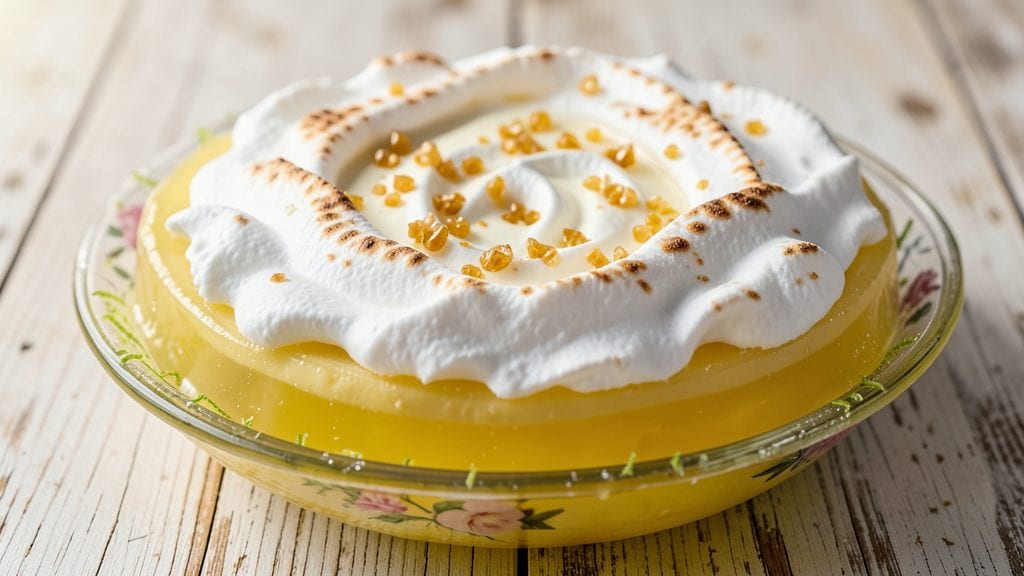
This Jello classic lemon meringue pie recipe delivers the perfect balance of tangy citrus and fluffy meringue—just like your favorite bakery version. The secret lies in layering a vibrant Jello base with a rich lemon curd filling, then crowning it with golden, cloud-like meringue that bakes to crispy perfection.
I’ve perfected this technique over years of testing, ensuring each component sets properly without becoming soggy.
The beauty of this recipe is its simplicity: no fancy equipment or advanced skills required. You’ll start with a cool Jello layer that provides structure, then add a smooth lemon curd filling that’s bright and zesty.
The meringue topping, made with egg whites and sugar, bakes to a golden crust while keeping its light, airy texture. This pie tastes even better after chilling overnight, allowing flavors to meld beautifully.
What makes this version stand out is the foolproof method for achieving that signature meringue peak—high heat for browning followed by a low oven setting to prevent collapsing. The result is a pie with crisp edges, tender citrus filling, and a meringue topping that’s both visually stunning and irresistibly sweet.
Perfect for potlucks, family gatherings, or a special dessert night.
For those who prefer variations, you can easily adapt this recipe to a no-bake version by using whipped cream instead of meringue or substituting traditional gelatin with agar-agar for a vegan option.
The classic flavors remain the same, just with a modern twist. Let’s get started on creating this timeless dessert masterpiece.
Ingredients for jello classic lemon meringue pie
Classic layers of vibrant Jello, zesty lemon curd, and fluffy meringue—just eight essential ingredients create bakery-style perfection.
| Ingredient | Amount | Notes |
|---|---|---|
| Unflavored Gelatin 🍬 | 1 package | Knockbox or similar brand preferred |
| Hot Water 💧 | 1 ½ cups | Boiled and cooled to 160°F |
| Lemon Juice 🍋 | 1 cup | Freshly squeezed, no pulp |
| Granulated Sugar 🍚 | 1 ½ cups | White sugar, no substitutes |
| Large Egg Yolks 🥚 | 4 whole | Room temperature preferred |
| Unsalted Butter 🧈 | ½ cup | Cold and cubed |
| All-Purpose Flour 🌾 | ¼ cup | For thickening lemon curd |
| Large Egg Whites 🥚 | 5 whole | Room temperature, no yolks |
| Superfine Sugar 🍚 | 1 ¼ cups | For meringue stability |
| Vanilla Extract 🌸 | 1 tsp | Pure vanilla preferred |
| Salt 🧂 | ¼ tsp | Kosher or sea salt |
| Lemon Zest 🍋 | 1 tbsp | From 1 large lemon |
| Unbaked 9-Inch Pie Crust 🥧 | 1 whole | Store-bought or homemade |
The gelatin is the foundation—Knockbox or similar powdered gelatin dissolves smoothly without grains. For the Jello layer, use hot but not boiling water (160°F) to prevent overcooking. Fresh lemon juice is non-negotiable here; bottled lacks the bright acidity needed to balance the sweetness. ReaLemon or fresh-squeezed delivers the best flavor. The pie crust can be store-bought for convenience, but a homemade one adds that professional touch. Pre-bake it blind to prevent sogginess during the meringue baking stage.
No superfine sugar? Pulse regular granulated sugar in a food processor for a fine texture that whips meringue properly. Substituting butter with margarine in the lemon curd will make it greasier—stick with unsalted butter for the best texture. For a no-bake option, replace meringue with whipped cream stabilized with gelatin. The lemon zest adds aromatic depth, so don't skip it—just use organic lemons to avoid wax. If you're short on egg whites, aquafaba works at half the volume, though texture may differ slightly.
Store the unbaked pie in the fridge for up to 24 hours before baking to let flavors meld. The meringue must bake immediately after assembly—delaying even 30 minutes risks collapse. Once baked, keep at room temperature for 2-3 hours before slicing to let the meringue set fully. For make-ahead convenience, assemble the pie (without baking) and refrigerate for up to 2 days. The meringue topping can be piped ahead and stored covered in the fridge for 1 day, but bake it fresh for best results.
Why You'll Love This Recipe
- No-Bake Magic: I swear by this recipe when I need dessert in 15 minutes flat. Just bloom the gelatin in hot water, mix in lemon juice, and let it set—no oven, no fuss, no waiting for crusts to blind bake. The only "work" is stirring, and honestly? That’s my kind of recipe.
- Tart-Sweet Perfection: That bright lemon juice cuts through the sugar like a summer breeze, and the meringue? It’s not too sweet, not too sharp—just balanced. The gelatin gives it this silky texture that’s almost like a mousse but still feels fancy. My husband licks his plate every time.
- Party in a Box: Between us, this is my go-to for potlucks and last-minute gatherings. It travels well (no worries about it melting), serves a crowd, and looks impressive without effort. I’ve brought it to BBQs, book clubs, and even my mom’s house—and no one ever guesses it’s basically gelatin.
- Pantry Staple Power: I keep gelatin, sugar, and lemons on hand anyway, so this costs me pennies to make. Plus, leftovers? They last for days in the fridge (if they last that long). It’s my secret weapon for when I want something special but don’t want to break the bank or spend hours in the kitchen.
Step-by-step instructions for Jello classic lemon meringue pie
Here's how to assemble this timeless dessert with perfect citrus layers and velvety meringue.
Prepare the Lemon Curd Filling
In a medium saucepan, combine the 1 package unflavored gelatin with the 1.5 cups hot water and whisk until completely dissolved. Remove from heat and stir in the 1 cup lemon juice, 1.5 cups granulated sugar, 4 whole large egg yolks, 0.5 cup unsalted butter, 0.25 cup all-purpose flour, 1 tsp vanilla extract, 0.25 tsp salt, and 1 tbsp lemon zest. Return to low heat and cook for 8-10 minutes, stirring constantly, until the mixture thickens to a pudding-like consistency that coats the back of a spoon.
This thickened curd should be smooth with no visible flour specks. If it thickens too quickly, reduce the heat immediately. The curd must cool to room temperature before proceeding—this prevents the gelatin from setting prematurely in the pie.
Assemble the Pie Crust
Roll out the 1 whole unbaked 9-inch pie crust on a floured surface to fit a 9-inch pie dish. Press it gently into the bottom and up the sides, trimming any excess dough. Blind-bake the crust by lining it with parchment paper, filling with pie weights or dried beans, and baking at 375°F for 15 minutes. Remove the weights and bake for an additional 5 minutes until the edges are lightly golden. The crust should be completely set but not browned.
This pre-baking step creates a sturdy foundation that prevents sogginess when the lemon curd is poured in later. Let the crust cool completely before adding the filling—warm crust can cause the curd to melt and lose its structure.
Pour and Set the Lemon Layer
Pour the cooled lemon curd mixture into the prepared pie crust, spreading it evenly with a spatula. Tap the pie dish gently on the counter to remove any air bubbles. Cover the pie with plastic wrap and refrigerate for 4-6 hours or until the filling is completely set. The curd should hold its shape when gently shaken and have a firm, jelly-like texture.
This chilling time is crucial for developing the classic Jello texture. If you're short on time, you can accelerate setting by placing the pie in the freezer for 2 hours, but this may slightly alter the texture. The filling should be firm enough to support the meringue without collapsing.
Prepare the Meringue Topping
In a clean, grease-free mixing bowl, beat the 5 whole large egg whites on medium speed until soft peaks form. Gradually add the 1.25 cups superfine sugar, 1 tablespoon at a time, increasing the speed to high. Beat until the meringue is glossy and holds stiff peaks that stand upright when the beaters are lifted. This typically takes 5-7 minutes of continuous beating.
The meringue should be thick enough to hold its shape when piped but still smooth enough to spread evenly. If the mixture becomes grainy, start over with fresh egg whites—they're too old to stabilize properly. Work quickly once the meringue is ready to prevent it from drying out.
Top and Bake the Pie
Spread the meringue evenly over the set lemon curd, creating a slight overhang at the edges. Use the back of a spoon to create decorative swirls or peaks. Immediately place the pie in a 350°F preheated oven and bake for 12-15 minutes until the meringue is golden brown and crisp. Watch carefully to prevent over-browning—it only needs to develop color, not harden completely.
Let the pie cool completely at room temperature before slicing. The meringue will firm up as it cools, creating that signature cloud-like texture. For best flavor, refrigerate the pie for at least 2 hours before serving to allow the lemon curd to fully set and develop its tangy sweetness.
Pro Tips For Making Jello Classic Lemon Meringue Pie
- Bloom the Gelatin Right: DESCRIPTION: Sprinkle the unflavored gelatin over cold water first—it absorbs faster and more evenly than dumping it straight into hot liquid. I used to rush this, and the gelatin would clump like sad overcooked rice; now I let it sit for 5 minutes before adding the hot water. No lumps, every time.
- Strain the Lemon Juice: DESCRIPTION: Skip the bottled stuff—fresh lemon juice has pulp that clouds the filling. Strain it through a fine-mesh sieve into a bowl, then measure from there. (Yes, it’s extra work, but the filling stays silky instead of gritty.) If you’re using concentrate, dilute it 1:1 with water—overdoing it makes the pie taste like cough syrup.
- Temper Those Yolks: DESCRIPTION: Whisk the egg yolks into the warm (not boiling) lemon mixture gradually, a little at a time, while stirring constantly. I learned this the hard way—dumping cold yolks into hot liquid curdles them faster than you can say "disaster." A double boiler works, but even just pouring the hot liquid into the yolks in a thin stream does the trick.
- Chill the Filling Fully: DESCRIPTION: Don’t rush the fridge time—let the lemon layer set for at least 4 hours (overnight is better). I once cut into it at 3 hours, and the wobbly center made the whole pie look like a science experiment gone wrong. Patience here means clean slices, not a runny mess. (Pro move: Cover it loosely with plastic wrap pressed directly on the surface to prevent a skin from forming.)
Serving suggestions for this dish
Classic Presentation
Serve this pie on a wooden board or white porcelain platter to highlight its vibrant colors. I like to garnish each slice with a sprinkle of powdered sugar and a lemon twist for that bakery-fresh touch.
The contrast between the golden meringue and the bright yellow lemon curd makes it visually stunning. 🌟
Whipped Cream Pairing
Add a dollop of homemade whipped cream to each slice for extra richness. I use heavy whipping cream with a pinch of vanilla sugar for a light, airy finish.
For a citrus twist, fold in 1 teaspoon of lemon zest before whipping. This balances the tartness of the lemon curd beautifully.
Fresh Berries Topping
Top slices with raspberries or blueberries for a pop of color and acidity. The berries add freshness that cuts through the sweetness of the meringue. I recommend strawberries for a classic pairing—their natural sweetness complements the lemon perfectly. 🍓
Coffee or Tea Companion
Serve this pie with hot black coffee or Earl Grey tea to enhance the citrus flavors. The tannins in tea help cleanse your palate between bites, while coffee’s bitterness balances the dessert’s sweetness. For a non-caffeinated option, sparkling lemonade adds a refreshing contrast.
Portioning Tips
Use a sharp chef’s knife to slice clean wedges—warm the knife slightly under hot water first for smoother cuts. Serve 2-3 slices per person to avoid overwhelming guests. For a dramatic presentation, place each slice on a small dessert plate with a gold leaf accent for a restaurant-worthy touch.
Nutrition facts
Frequently asked questions
Can I make this lemon meringue pie without baking?
Yes! For a no-bake version, replace the meringue with 1 cup of whipped cream stabilized with 1 teaspoon of gelatin (dissolved in 2 tablespoons hot water). Spread it gently over the set lemon curd layer and chill for 4-6 hours until firm. Decorate with extra lemon zest or berries for a fresh finish.
Why did my meringue collapse during baking?
Meringue collapses most often from trapped moisture or overmixing egg whites. Ensure your lemon curd is completely set (no jiggle) before adding meringue, and pipe it directly onto the curd—don’t spread it first. Also, avoid opening the oven door while baking. For extra stability, add 1/8 teaspoon cream of tartar to the egg whites.
How do I make this pie vegan?
Replace the gelatin with 2 teaspoons agar-agar powder (mixed with 3 tablespoons water) for the lemon layer. For meringue, use aquafaba (liquid from a can of chickpeas) whipped with 1.5 cups superfine sugar and 1/2 teaspoon cream of tartar. Bake at 325°F for 15-18 minutes to prevent browning. The texture will be slightly denser but still delicious!
Can I prepare the lemon curd ahead of time?
The lemon curd can be made 1 day ahead and stored in the fridge in an airtight container. Stir gently before using to redistribute any settled butter. For the meringue, whip it fresh 1-2 hours before assembling the pie to maintain peak volume. The pie itself can be assembled (without baking) and refrigerated for 24 hours before baking.
What’s the secret to a perfectly crisp meringue?
The key is room-temperature egg whites and superfine sugar. Beat the whites to stiff peaks before gradually adding sugar. Bake at 350°F for 12-15 minutes—watch closely! The meringue is done when golden brown, not pale. For extra crispiness, broil for 1-2 minutes** at the end (watch like a hawk!). Let it cool completely before slicing to avoid a soggy top.