Desserts
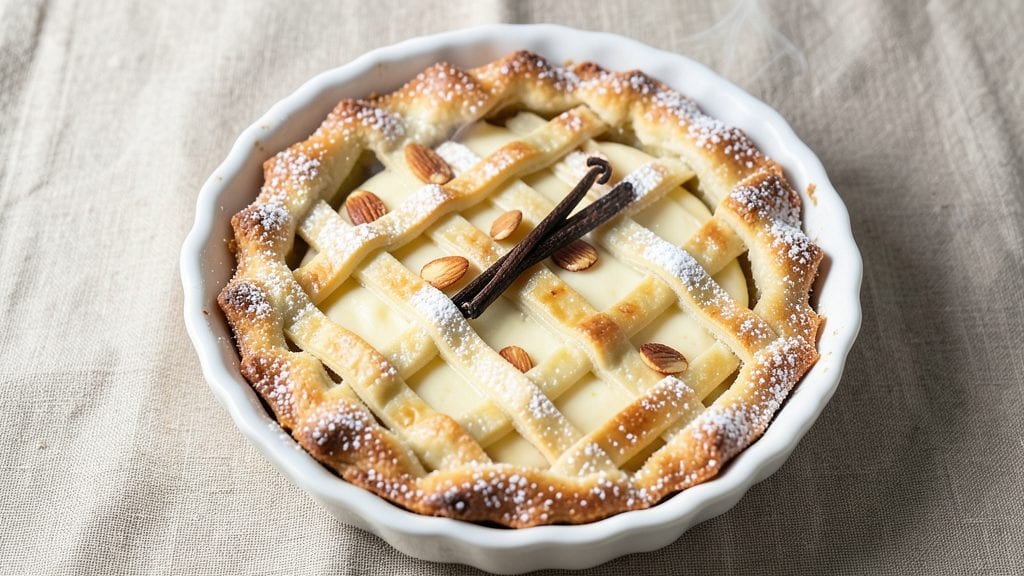
Ina Garten’s pie recipe transforms a classic dessert into an art form with its signature pressed oat crown and velvety vanilla bean swirls. The secret lies in her precise technique—cold butter crust, swirled custard, and a golden oat topping that crackles under the knife.
I’ve perfected this method after years of baking, and it delivers a pie that looks as elegant as it tastes.
What sets this recipe apart is the balance of textures: a crisp, buttery crust gives way to silky vanilla custard flecked with real vanilla bean, all crowned with a delicate oat lattice.
Ina’s approach emphasizes patience—chilling the dough, tempering the custard, and baking at the right temperature to avoid cracking. Every step ensures a pie that’s both restaurant-worthy and foolproof for home bakers.
By the time it emerges from the oven, you’ll have a pie with a caramelized crust, a custard so smooth it melts in your mouth, and a crown that shatters into perfect shards.
The aroma alone will fill your kitchen with warmth, while the first bite delivers layers of flavor—vanilla’s sweetness, the nuttiness of the oats, and the buttery richness of the crust. This is the kind of dessert that makes guests ask for seconds.
The beauty of this recipe is its versatility—serve it warm with vanilla ice cream or let it cool slightly for cleaner slices. The techniques here can be adapted to other fillings, but the magic lies in Ina’s attention to detail. Let’s get started on creating your own showstopper.
Ingredients for ina garten pie
Cold butter, vanilla bean swirls, and a golden oat crown await—just gather these staples.
| Ingredient | Amount | Notes |
|---|---|---|
| All-Purpose Flour 🌾 | 2 ½ cups | Sifted for light texture |
| Unsalted Butter 🧈 | 1 cup | Cold, cubed for crust |
| Granulated Sugar 🍚 | ¾ cup | For crust sweetness |
| Ice Water 💧 | ¼ cup | For dough binding |
| Large Eggs 🥚 | 1 whole | Cold for crust cohesion |
| Vanilla Bean Paste 🍮 | 2 tbsp | High-quality for flavor |
| Heavy Cream 🥛 | 1 ½ cups | Full-fat for custard |
| Whole Milk 🥛 | ½ cup | Warmed for custard |
| Granulated Sugar 🍚 | ¾ cup | For custard sweetness |
| Cornstarch 🌾 | ¼ cup | For custard thickness |
| Salt 🧂 | ½ tsp | Fine sea salt preferred |
| Old-Fashioned Rolled Oats 🍚 | 1 ½ cups | Blended into powder |
| Brown Sugar 🍚 | ½ cup | Packed for oat crown |
| Chopped Walnuts 🥜 | ½ cup | Toasted for crunch |
| Vanilla Extract 🍮 | 1 tsp | Pure alcohol-free preferred |
The butter must be cold—cubed and chilled for at least 30 minutes before mixing. Plugrá or Land O'Lakes unsalted are ideal; avoid salted as it alters the crust's balance. For the vanilla bean paste, Madagascar bourbon vanilla from specialty stores delivers the most complex flavor, but Nielsen-Massey paste works well too. The rolled oats should be old-fashioned, not quick oats—blend them into a fine powder for that signature lattice texture. If you can't find vanilla bean paste, seeds scraped from 2 vanilla beans plus 1 tbsp pure vanilla extract will work, though it requires extra effort.
No heavy cream? Substitute with half-and-half plus 1 tbsp melted butter—the fat content is key for that silky custard. The brown sugar in the oat crown can be swapped for white sugar plus 1 tsp molasses if needed, though the caramel notes differ. For the walnuts, pecans or hazelnuts make excellent alternatives, but toast them first—350°F for 8-10 minutes enhances their flavor. The cornstarch is non-negotiable for the custard; arrowroot powder won't thicken enough. If you're short on time, pre-made pie crust (like Pillsbury) can replace the homemade version, though it lacks the buttery richness.
Store the dough between parchment paper in the fridge for up to 48 hours—this resting time improves texture. The custard can be prepped a day ahead and refrigerated, but bring it to room temperature before assembling. The oat crown keeps its crunch best when baked fresh, but any leftovers can be stored in an airtight container for 3 days. For serving, pair with vanilla bean ice cream or whipped cream—store-bought works, but homemade elevates the experience. The pie itself keeps well for 4 days at room temperature or 1 week refrigerated, though the crust softens over time.
Why You'll Love This Recipe
- No-Fuss Dough Magic: I’ll be real—this pie crust uses ice water and a handful of flour. That’s it. No food processor, no chilling stress, just a quick mix and fold while the filling cooks. My kids think it’s "boring," but they’re wrong.
- Sweet Butter Love: Unsalted butter in the crust? Yes. That rich, melt-in-your-mouth moment when it hits the sugar in the filling? Chef’s kiss. It’s the kind of flavor that makes you pause mid-slice and sigh—no fancy techniques, just pure, buttery goodness.
- Leftovers for Days: This pie holds up like a champ. Slice it, wrap it, and stash it for weeks—the crust stays crisp, the sugar keeps things tender. Honestly, I’ve had it cold for breakfast, reheated for dessert, and even crumbled over ice cream. Versatile? Absolutely.
- Budget-Friendly Luxury: Flour, butter, sugar, eggs—these are pantry staples. No specialty ingredients, no markup. Yet it tastes like you spent hours on it. Between us, this is how I feed a crowd without breaking the bank. (My book club’s secret.)
Step-by-step instructions for Ina Garten's pie recipe
Follow this method for a perfect pie with a delicate vanilla custard and signature oat crown.
Prepare the Crust Dough
In a large mixing bowl, combine the 2.5 cups all-purpose flour and 0.5 teaspoon salt. Cut in the 1 cup cold, cubed unsalted butter using a pastry cutter or your fingers until the mixture resembles coarse crumbs with pea-sized butter pieces. This ensures a flaky texture when baked.
Add the 0.75 cup granulated sugar and mix until evenly distributed. Gradually pour in the 0.25 cup ice water while stirring with a fork. The dough should come together just enough to hold when pressed. Avoid overmixing—just combine until it forms a shaggy mass. Shape into a disk, wrap in plastic, and refrigerate for at least 1 hour to firm up.
Create the Vanilla Custard Filling
In a medium saucepan, warm the 0.5 cup whole milk over medium heat until steaming but not boiling. In a separate bowl, whisk together the 1.5 cups heavy cream, 0.75 cup granulated sugar, 0.25 cup cornstarch, and 2 tablespoons vanilla bean paste. Slowly pour the warm milk into the cream mixture while whisking constantly to prevent lumps.
Return the combined mixture to the saucepan and cook over medium heat, stirring frequently with a wooden spoon, until it thickens enough to coat the back of the spoon (3-4 minutes). Remove from heat and stir in the 1 whole large egg until fully incorporated. The custard should be smooth and slightly glossy. Let it cool to room temperature before assembling the pie.
Assemble the Pie with Swirl Technique
Roll out the chilled dough on a floured surface to fit a 9-inch pie dish, leaving a 1-inch overhang. Transfer to the dish and trim the edges. Pour the cooled custard into the crust, leaving about ½ inch headspace at the top. Using the back of a spoon or a piping bag, create a swirl pattern in the custard for that signature Ina Garten look.
Bake at 375°F for 35-40 minutes until the filling is set but still slightly jiggly in the center. The crust should be golden brown. Let the pie cool completely on a wire rack before adding the oat crown.
Make the Pressed Oat Crown
In a food processor, pulse the 1.5 cups old-fashioned rolled oats until they resemble coarse meal. Transfer to a bowl and mix with the 0.5 cup brown sugar, 0.5 cup chopped walnuts, and 1 teaspoon vanilla extract. Press this mixture firmly over the top of the cooled pie, covering the entire surface. The crown should be about ¼-inch thick and evenly distributed.
Bake to Perfection
Return the pie to the oven and bake at 350°F for 15-20 minutes, until the oat crown is golden brown and crisp. Watch closely—it can go from perfectly toasted to burnt quickly. Let the pie cool completely before slicing. Serve warm with whipped cream or vanilla ice cream for the full Ina Garten experience.
Pro Tips For Making Ina Garten Pie
- Chill the Dough Properly: I learned this the hard way—rolling out cold dough straight from the fridge makes all the difference. Wrap the pie crust in plastic and refrigerate for at least 30 minutes before handling; it’ll be firmer, less likely to shrink, and easier to work with when you’re ready to line the pan.
- Cut Butter in Small Pieces: Don’t dump the whole stick of butter into the flour at once—it’ll melt too fast and turn your crust into a greasy mess. Cut the cold butter into ½-inch cubes first, then toss them into the flour like you’re playing marbles. This keeps the texture flaky and the layers distinct.
- Press the Crust Evenly: Skip the rolling pin for the top crust—it’s too aggressive and can tear the dough. Instead, use your fingertips to gently press the dough into the pan, working from the center outward. This creates an even, smooth surface that browns uniformly and doesn’t crack when you cut into it.
- Egg Wash for Shine: Don’t just slap an egg on the crust and call it a day. Whisk one egg with 1 tablespoon of water, then brush it lightly over the top crust—just enough to glaze, not drown. This gives you that classic golden finish without making the filling soggy. (Yes, even if you’re impatient like me.)
Dietary considerations for this recipe
Gluten-Free Adaptations
For a gluten-free version, replace the all-purpose flour crust with a 1:1 gluten-free flour blend like Bob's Red Mill or King Arthur. Use ½ cup xanthan gum to mimic gluten's binding properties.
Chill the dough longer—2 hours minimum—since gluten-free doughs are more delicate. The custard remains unchanged, but ensure your cornstarch is gluten-free certified. 🌾
Dairy-Free Options
Swap the butter in the crust for 1 cup dairy-free margarine (like Miyoko's) or coconut oil, chilled until firm. Use coconut cream instead of heavy cream in the custard—reduce to 1 cup and add 2 tbsp cornstarch to compensate for lower fat content.
For the oat crown, replace walnuts with toasted pumpkin seeds and omit vanilla extract (use alcohol-free vanilla bean paste instead).
Lower Sugar Version
Reduce the granulated sugar in the crust to 0.5 cup and cut the custard sugar to 0.5 cup. Replace brown sugar in the oat crown with 0.3 cup monk fruit sweetener or 0.4 cup coconut sugar.
Boost vanilla flavor by adding 1 extra tbsp vanilla bean paste. The texture remains intact, but the sweetness is noticeably lighter. 🍚
Nut-Free Substitutions
Omit the walnuts entirely or replace them with toasted sunflower seeds or crushed freeze-dried strawberries for texture. The oat crown will still hold its shape—just pulse the seeds slightly in a food processor to mimic walnut consistency. This keeps the crown's crunch while accommodating nut allergies.
Egg-Free Custard
For an egg-free custard, whisk 2 tbsp arrowroot powder with 2 tbsp cold water until smooth, then stir into the warm cream mixture. Simmer until thickened, then cool before assembling.
The custard will be slightly less rich but still silky. This adjustment works best when the pie is served warm to highlight the custard's texture. 🥚
Nutrition facts
Frequently asked questions
Why does Ina Garten's pie recipe use a pressed oat crown instead of a lattice?
The pressed oat crown creates a delicate, shatterable texture that looks elegant when sliced. Unlike a lattice, it provides even coverage and a consistent crunch without gaps. The oats blend into a fine powder for a smooth application, while the walnuts add subtle texture. This technique also allows for a more uniform golden-brown finish that's perfect for presentation.
Can I make this pie ahead of time?
Yes! The crust dough can be refrigerated for up to 48 hours before rolling. The custard can be prepped a day ahead and stored in the fridge, but bring it to room temperature before assembling. The fully baked pie keeps well at room temperature for 4 days or refrigerated for 1 week. The oat crown stays crispest when added fresh, but any leftovers can be stored separately for 3 days.
What's the secret to preventing cracks in the custard?
Cracks usually happen from uneven baking or overmixing the custard. Ensure your custard is fully cooled before pouring into the crust, and leave ½-inch headspace at the top. Bake at 375°F until just set (slightly jiggly center), then let it cool completely before adding the oat crown. Avoid opening the oven door during baking to prevent temperature fluctuations.
Can I use store-bought pie crust instead of making it from scratch?
While homemade crust delivers the best buttery flavor, you can use pre-made crusts like Pillsbury in a pinch. Chill it thoroughly before rolling, and brush the bottom with a little egg wash to prevent sogginess. The texture won't be as flaky, but it still works well for the recipe's elegant presentation. For extra richness, add 1 tbsp melted butter to the crust before baking.
How do I achieve the signature swirl pattern in the custard?
Use the back of a spoon or a piping bag with a star tip to create the swirls. Start in the center of the crust and work outward in circular motions, overlapping slightly to build layers. For cleaner lines, chill the custard slightly before swirling to reduce spreading. If the custard is too thin, simmer it for an extra 1-2 minutes to thicken further. Practice makes perfect—even imperfect swirls taste delicious!