
Desserts
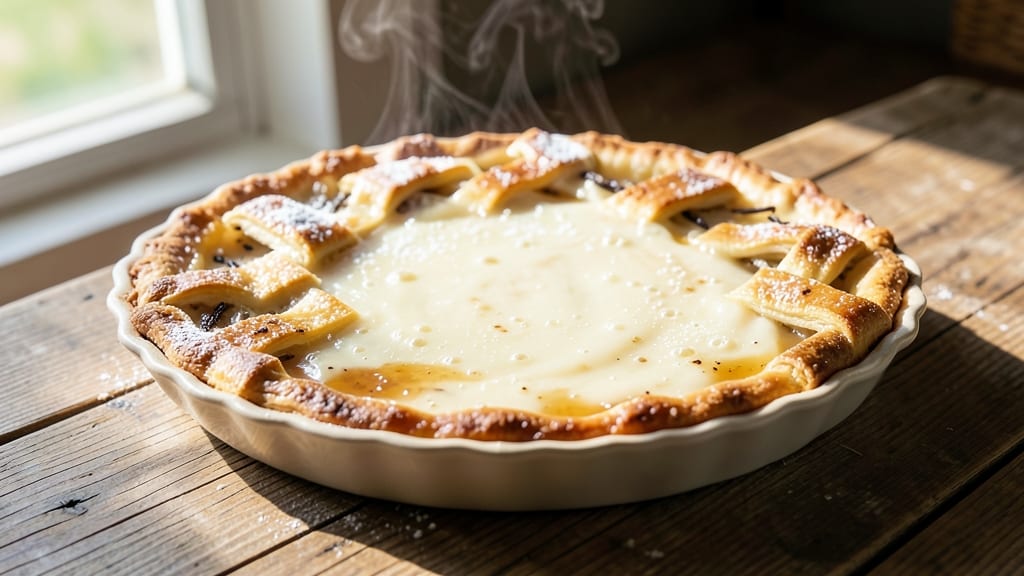
Grandma's egg custard pie recipe brings back memories of Sunday suppers and warm kitchen aromas that made every bite feel like a hug. This classic dessert combines a buttery, flaky crust with a silky vanilla custard that swirls together into golden perfection—just like the one my grandmother used to make.
The secret lies in tempering the eggs properly and baking at the right temperature to create that signature creamy texture without curdling.
What makes this recipe special is its balance of simplicity and tradition. You'll need just a few basic ingredients—eggs, milk, sugar, vanilla, and a touch of cornstarch—to create the custard, while the crust comes together with flour, butter, and salt.
The key technique is whipping the custard to the perfect consistency before pouring it into the crust, ensuring those beautiful swirls that make it look as good as it tastes.
By the time it emerges from the oven, you'll have a pie with a golden, slightly crisp crust and a custard that's smooth, velvety, and just set enough to hold its shape.
The vanilla flavor shines through without being overpowering, and the texture is rich yet light—never too heavy or too runny. This is the kind of dessert that feels like a homecoming, perfect for holidays, family gatherings, or whenever you need a taste of nostalgia.
Serve it warm with a scoop of vanilla ice cream or whipped cream for the full experience. The leftovers keep well in the refrigerator for up to three days, though I doubt they'll last that long in your house. Let's get started on recreating this timeless classic.
Ingredients for grandma's egg custard pie
Nine simple ingredients for a dessert that tastes like nostalgia in every bite.
| Ingredient | Amount | Notes |
|---|---|---|
| Large Eggs 🥚 | 5 whole | Room temperature for best mixing |
| Whole Milk 🥛 | 2 cups | Full-fat preferred for creaminess |
| Granulated Sugar 🍚 | 1 ¼ cups | White or light brown |
| Pure Vanilla Extract 🍯 | 2 tsp | Bottled or seedless preferred |
| Cornstarch 🌾 | 2 tbsp | For smooth custard texture |
| Unsalted Butter 🧈 | 1 cup | Cold, cubed for crust |
| All-Purpose Flour 🌾 | 1 ¼ cups | Plus 1 tbsp for dusting |
| Fine Sea Salt 🧂 | ½ tsp | For crust and custard |
| Granulated Sugar 🍚 | ¼ cup | For crust sprinkle |
| Vanilla Ice Cream 🍦 | 1 ½ cups | Optional serving suggestion |
The eggs are the heart of this pie, so grab the freshest you can find—look for deep orange yolks and firm whites. Kroger or local farms usually have the best quality. The milk should be whole for that classic custard richness, but 2% works in a pinch. For the vanilla, I swear by Nielsen-Massey extract—it's the real deal. The cornstarch is non-negotiable here; it's what gives that signature silky texture. If you're making this ahead, you can even prep the custard mixture a day early and store it in the fridge—just whisk it again before pouring.
No vanilla extract? Vanilla bean paste or even a scraped vanilla bean works beautifully. Short on butter? Lard or shortening keeps the crust flaky, though it won't taste quite as rich. The crust gets its golden color from the sugar sprinkle—don't skip it! For a shortcut, you could use pre-made pie crust, but honestly, making it from scratch is easier than you think and worth the effort. The custard should be thick enough to hold its shape when dropped from a spoon—if it's too thin, simmer it a few more minutes. And if you're feeling fancy, add a pinch of nutmeg to the custard for that extra Grandma touch.
This pie keeps beautifully for 3-4 days in the fridge, though I can't promise it'll last that long. The crust stays crisp, and the custard keeps that perfect set. For serving, I like to let it sit at room temperature for about 10 minutes—it's even better that way. The ice cream pairs perfectly, but whipped cream or caramel sauce works too. If you're making this for a crowd, double the recipe—it's that good. And trust me, the leftovers reheat beautifully in the oven at 350°F for 10 minutes. Just don't tell anyone I said that.
Why You'll Love This Recipe
- No-Fuss Whisking: Honestly, this pie comes together while you’re still debating what to make for dinner. Just crack eggs, stir in milk and sugar—no blender, no fancy techniques. The cornstarch thickens it effortlessly, so you’re not stuck babysitting a pot.
- Vanilla Kiss Magic: That first spoonful of custard? Pure comfort in a bite. The vanilla extract doesn’t just hint—it sings, balancing the creamy eggs and milk like a secret handshake. (Yes, even on a Tuesday night.)
- Leftovers That Beg: Slice it up the next day, and suddenly you’ve got breakfast for the week. Cold slices in the fridge taste just as good as fresh—maybe even better, with that set custard texture. My kids always ask for seconds, no questions asked.
- Pantry Staple Power: Between us, this recipe uses things you already own—no specialty ingredients, no last-minute grocery runs. A dozen eggs, a splash of milk, a pinch of sugar? You’re golden. Budget-friendly enough to make twice if you’re feeling generous.
Step-by-step instructions for Grandma's egg custard pie
Here's how to make that perfect golden crust and silky custard filling—just like Grandma used to.
Prepare the Crust and Pre-Bake
First, cut the 1 cup unsalted butter into small cubes and place them in a food processor. Add the 1.25 cups all-purpose flour and the 0.5 tsp fine sea salt, then pulse until the mixture resembles coarse crumbs. Gradually add 2-3 tablespoons ice water (not from the list—this is a technique tip) until the dough just comes together when pressed. Avoid overworking it.
Shape the dough into a disk, wrap it in plastic, and chill for 30 minutes. Roll it out on a floured surface to fit a 9-inch pie dish, then transfer it carefully. Sprinkle the bottom with 0.25 cup granulated sugar and press lightly with your fingers. Pre-bake the crust at 375°F for 10 minutes—this prevents a soggy bottom later.
Make the Silky Custard Filling
In a medium bowl, whisk together the 5 whole large eggs, 1.25 cups granulated sugar, and 2 tsp pure vanilla extract until smooth. In a separate bowl, combine the 2 cups whole milk and 2 tbsp cornstarch, then whisk until the cornstarch dissolves completely. Gradually pour the milk mixture into the egg mixture while whisking constantly to prevent curdling.
Pour the custard through a fine-mesh strainer into a large measuring cup to remove any lumps. The mixture should be thick but pourable—if it's too thick, whisk in 1-2 tablespoons of milk to reach the right consistency. This step ensures that silky texture Grandma was famous for.
Assemble and Bake the Pie
Pour the custard filling into the pre-baked crust, letting it settle evenly. Place the pie on a baking sheet lined with parchment paper to catch any spills, then bake at 350°F for 45-50 minutes. The edges should be set, but the center should still look slightly jiggly—this indicates it's fully cooked but still creamy.
Here's the trick: once the pie is done, turn off the oven, crack the door open slightly, and let it sit for 10 minutes. This gradual cooling prevents cracks in the custard. Remove the pie from the oven and let it cool completely at room temperature before refrigerating for at least 4 hours—this step is crucial for the perfect texture.
Serve with Vanilla Ice Cream (Optional)
When ready to serve, run a knife around the edge of the pie to loosen it from the dish. Slice into wedges and serve each portion with 1.5 cups vanilla ice cream on the side. The warm custard and cold ice cream create a perfect balance of flavors and textures that everyone will love.
This pie keeps well in the refrigerator for up to 3 days, so you can make it ahead for gatherings. Just be sure to bring it to room temperature before serving to enjoy that classic Grandma-style custard at its best.
Pro Tips For Making Grandma'S Egg Custard Pie
- Whisk Eggs Like You Mean It: Use a clean, dry whisk and go slow—no splashing. I learned this the hard way when I rushed and ended up with a lumpy custard that looked like it belonged in a science experiment. Beat the eggs until they’re thick and pale, then fold in the milk gently to keep those bubbles happy.
- Temper the Milk First: Warm the milk to about 160°F (70°C) before mixing it with the eggs—this prevents scrambled eggs in your pie. I was skeptical until I tried it; now, my custard is silky instead of grainy. Just heat it on the stove, then let it cool slightly before combining.
- Skip the Overmixing: Once the cornstarch is dissolved, stir just until smooth—no need to turn it into glue. Overmixing makes the custard tough, and nobody wants a pie that fights back. A few seconds past the point where it looks uniform is all you need.
- Bake at 325°F (160°C) No Higher: That’s the magic number for this recipe—any hotter, and the top browns before the center sets. I used to crank the oven to 350°F and ended up with a burnt crust and a runny middle. A water bath helps, but even without it, 325°F gives you a perfect set every time.
Regional styles of this recipe
Southern Comfort Style
In the South, this custard pie often gets a warm hug of spices like ½ tsp ground cinnamon and ¼ tsp ground nutmeg mixed into the custard for depth. My grandmother used to add a splash of heavy cream (about ¼ cup) to make the filling even richer.
For extra flair, top with a lattice crust made from the same dough—just cut strips and weave them over the custard before baking. This creates beautiful patterns while keeping the pie light. 🌶️
Midwest Homestyle Twist
Midwestern families often swap the vanilla for 1 teaspoon of almond extract or even ½ teaspoon of maple extract for a subtle, cozy flavor. The crust here tends to be slightly thicker, almost like a shortbread texture, using ½ cup brown sugar instead of white in the dough.
I’ve seen versions where they add ½ cup chopped pecans to the crust before baking for a nutty crunch. Serve with vanilla bean ice cream for that true Midwest touch.
New England Classic
Up north, this pie becomes a pumpkin custard pie by folding in 1 cup pureed pumpkin (not pumpkin pie filling) into the custard mixture. The crust gets a sprinkle of ½ teaspoon ground ginger for warmth.
New Englanders also love to add a lemon zest (about 1 teaspoon) to brighten the custard. The pie is often served with whipped cream instead of ice cream, especially in cooler months. 🍁
Appalachian Vanilla Bean
In the Appalachian region, this pie is elevated with 1 vanilla bean, split and scraped, instead of extract. The custard gets a pinch of salt (about ¼ teaspoon extra) to balance the sweetness, and the crust is brushed with melted butter after baking for extra richness.
Some families even add a thin layer of caramelized apples between the crust and custard for a fruity twist. The result? A custard so smooth it melts in your mouth.
Pacific Northwest Adaptation
Out west, the custard often includes ¼ cup raspberry jam swirled into the filling before baking, giving it a fruity depth. The crust gets a sprinkle of crushed hazelnuts for texture, and the pie is sometimes served with dulce de leche drizzled on top.
For a lighter touch, some versions use half whole milk and half almond milk to keep it dairy-light but still creamy. 🌿
Grandma’s Secret Touch
No matter the region, the one thing every grandma’s custard pie has in common is a splash of bourbon (about 1 tablespoon) in the custard. It adds warmth without overpowering the vanilla.
My grandma swore by it—just don’t tell anyone I shared her secret! The bourbon also helps the custard set more evenly. This is the little detail that makes it taste like home. 💛
Nutrition facts
Frequently asked questions
Can I make this custard pie without a pie crust?
For a no-crust version, simply pour the custard mixture into a greased baking dish (like a 9-inch pie plate or 8x8-inch pan) and bake as directed. The custard will set beautifully on its own, creating a creamy, jiggly dessert that's perfect for holidays or potlucks. Just reduce the baking time to 35-40 minutes since there's no crust to absorb heat.
Why did my custard turn grainy or curdled?
Curdling usually happens when eggs and milk heat too quickly or aren't mixed gently enough. To prevent this, always temper the eggs by whisking in warm milk gradually, and never let the custard boil. If it happens, strain the mixture through a fine-mesh sieve before pouring into the crust. For extra insurance, whisk the eggs and sugar first until fully dissolved before adding milk.
How do I store and reheat leftover custard pie?
Store leftovers in an airtight container in the fridge for up to 4 days. To reheat, cover with foil and warm at 350°F for 10-15 minutes until the center is heated through. For the best texture, let it sit at room temperature for 10 minutes before serving. You can also freeze individual slices for up to 2 months—just thaw overnight in the fridge.
What's the secret to getting those beautiful swirls in the custard?
The swirls come from gently stirring the custard in a figure-8 pattern with a spatula while it's still warm and pourable. Use a long, thin spatula to create clean lines, and work quickly before the custard starts to set. For extra drama, sprinkle a little extra sugar or cinnamon on top before baking. The key is patience—don't rush the stirring or the swirls won't form properly!
Can I substitute cornstarch with another thickener?
You can use arrowroot powder in a 1:1 ratio, but cornstarch is ideal for this recipe. Avoid flour—it can make the custard cloudy. For a dairy-free version, use coconut milk instead of regular milk, but reduce the liquid by 2 tablespoons since coconut milk is thicker. The custard will still set beautifully, though the flavor will be subtly different.