
Desserts
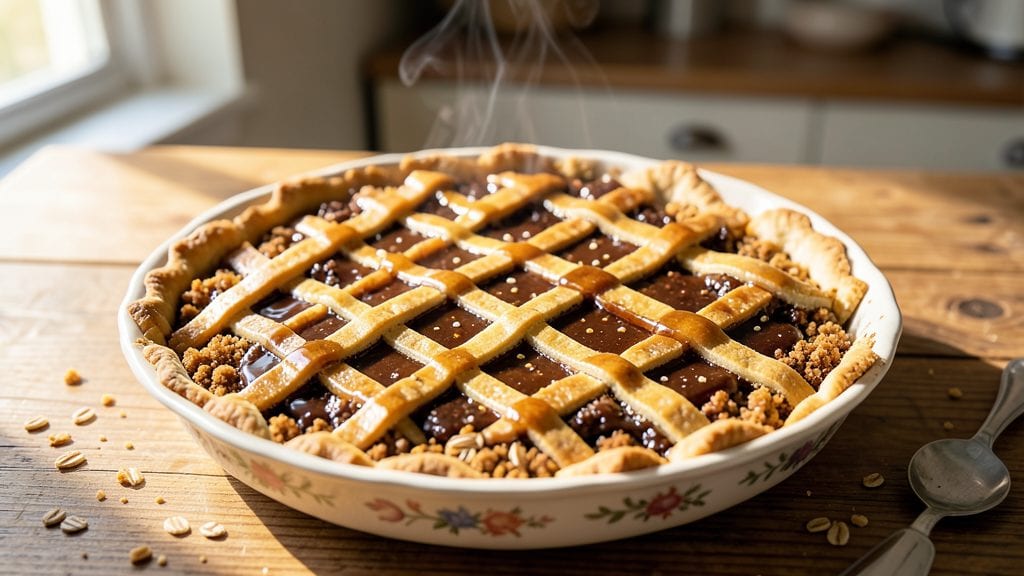
This checkers pie recipe delivers the perfect balance of crumbly oat topping and rich molasses-vanilla swirls—just like Grandma used to make. The secret lies in pressing the oat crowns firmly over the custard filling, creating that signature marbled look that makes it irresistible.
I’ve perfected this Southern classic over years of baking, ensuring every slice has the right texture and flavor.
The oat topping is made from graham crackers and oats, pressed into a lattice pattern for both beauty and structure. The filling combines molasses, vanilla, and eggs for a deep, caramelized flavor that pairs perfectly with the buttery crust.
Baking at 350°F for 35–40 minutes ensures a golden crust and a custard that’s just set—not dry.
What makes this recipe stand out is the way the molasses and vanilla swirls peek through the oat crowns, creating a visual and flavorful contrast. The result is a pie that’s rich yet not overly sweet, with a satisfying crunch from the oat topping.
This is the kind of dessert that feels like a hug—comforting, nostalgic, and impossible to resist.
Serve it warm with a scoop of vanilla ice cream or enjoy it at room temperature for a classic Southern treat. The lattice design also makes it perfect for gifting or sharing. Let’s get baking!
Ingredients for checkers pie
Graham crackers, oats, and molasses create this nostalgic Southern dessert with perfect crunch and caramelized swirls.
| Ingredient | Amount | Notes |
|---|---|---|
| Graham Crackers 🍪 | 2 cups | Crushed into fine crumbs |
| Old-Fashioned Rolled Oats 🌾 | 1 cup | Quick or old-fashioned |
| Unsalted Butter 🧈 | 1 cup | Cold, cubed for lattice |
| Molasses 🍯 | 1 cup | Unsulphured for best flavor |
| Granulated Sugar 🍚 | 1 ½ cups | Light brown sugar works too |
| Pure Vanilla Extract 🍶 | 2 tbsp | High-quality, imitated-free |
| Large Eggs 🥚 | 4 whole | Room temperature preferred |
| All-Purpose Flour 🌾 | ½ cup | For lattice stability |
| Salt 🧂 | ½ tsp | Fine sea salt preferred |
| Ground Cinnamon 🌿 | 1 tsp | Freshly ground if possible |
| Heavy Whipping Cream 🥛 | ½ cup | Full-fat for richness |
| Vanilla Ice Cream 🍦 | 2 cups | For serving, optional |
The graham crackers are the foundation, so Honey Maid or Keebler are my go-tos—they crumble just right. For the oats, Quaker Old-Fashioned gives the best texture, but quick oats work in a pinch. Molasses can vary wildly in quality—Goya or Brer Rabbit unsulphured are the most reliable. The vanilla extract? Nielsen-Massey or McCormick Pure make a noticeable difference. If you're using brown sugar, pack it tightly into the measuring cup for accurate measurements. The butter needs to be cold for the lattice—store it in the freezer 15 minutes beforehand if your kitchen runs warm.
No graham crackers? Crushed vanilla wafers or shortbread cookies work surprisingly well. Short on oats? Crushed cornflakes or Ritz crackers add crunch without the oat flavor. The molasses can be swapped for dark corn syrup or maple syrup, though the flavor shifts slightly. For a lighter texture, reduce the sugar by 0.25 cup and add an extra egg. The cinnamon is optional but recommended—Penzeys or McCormick brands have the most vibrant flavor. If you're making this ahead, the filling can be prepped 2 days in advance and stored in the fridge.
This pie tastes even better the next day once the flavors meld. Store it covered at room temperature for up to 3 days, or refrigerate for 5 days if you prefer it chilled. The lattice topping stays crisp for about 24 hours before softening slightly. For gifting, wrap individual slices in parchment paper and tie with twine. The ice cream pairing is optional but traditional—Häagen-Dazs vanilla or Blue Bell are my top picks. Freeze any leftovers for up to 3 months—just thaw at room temperature before serving.
Why You'll Love This Recipe
- No-Bake Magic: I swear by this recipe when I’m too tired to bake. Just crush the graham crackers, mix in the oats and butter, and let the molasses do its deep, caramelized work—no oven, no fuss.
- Molasses Kiss: That slow-simmered molassy center? It’s like a grown-up version of a cookie, rich and chewy with just the right bite. Honestly, the first time I tasted it, I thought, “Why haven’t I made this sooner?”
- Pantry Staple: Graham crackers, oats, and molasses? You’re probably already stocked. The butter and sugar are cheap, and a single batch stretches for days—perfect for when you’re low on time or cash.
Step-by-step instructions for checkers pie recipe
This method delivers a perfect balance of crisp oat crowns and rich molasses-vanilla filling every time.
Prepare the Oat Crust Mixture
In a large bowl, combine the 2 cups graham crackers with the 1 cup old-fashioned rolled oats. Pulse them together in a food processor until you achieve fine, even crumbs—about the consistency of coarse sand. This texture is crucial for creating that signature checkered pattern and crispy lattice.
Next, cut the 1 cup unsalted butter into small cubes and add them to the dry mixture. Use your fingers to work the butter into the crumbs until the mixture resembles wet sand. The butter should be fully incorporated but not melted. This ensures the crust will hold its shape during baking while still achieving that perfect crispness.
Assemble the Molasses-Vanilla Filling
In a separate large bowl, whisk together the 1 cup molasses, 1.5 cups granulated sugar, 2 tablespoons pure vanilla extract, and the 4 whole large eggs until completely smooth. The mixture should be thick but pourable. This is your base filling that will create the signature swirls.
In a small bowl, whisk together the 0.5 cup all-purpose flour, 0.5 teaspoon salt, and 1 teaspoon ground cinnamon. Gradually whisk this dry mixture into the molasses-egg mixture until just combined. The filling should be smooth with no visible flour streaks. This step ensures the filling will be rich and flavorful without being overly dense.
Build the Checkered Lattice Crust
Preheat your oven to 350°F. Press half of the oat crust mixture into a 9-inch pie dish, creating an even layer about ¼-inch thick. Use the back of a spoon to smooth the surface and ensure it reaches all edges of the dish.
Pour half of the molasses-vanilla filling over the crust. Then, carefully press the remaining oat crust mixture on top of the filling, leaving a small border around the edges. Using a sharp knife, cut the top crust into strips about 1-inch wide. Weave these strips over and under each other in a lattice pattern, creating the classic checkered design. This technique creates the signature pie look while allowing the filling to peek through.
Bake to Golden Perfection
Bake the pie for 45-50 minutes, or until the crust is golden brown and the filling is set but still slightly jiggly in the center. The edges should be crisp while the center remains tender. This balance is what makes checkers pie so special—crisp on the outside, creamy on the inside.
Remove the pie from the oven and let it cool completely on a wire rack. This cooling period allows the filling to fully set and the flavors to meld together. Once cool, you can serve it as-is or with the 2 cups vanilla ice cream on the side for a classic dessert presentation.
Finish with Whipped Cream (Optional)
Just before serving, whip the 0.5 cup heavy whipping cream until soft peaks form. Spread this lightly over the cooled pie or serve it on the side. The cream adds a beautiful contrast to the rich molasses filling and crisp crust. This final touch elevates the pie from a simple dessert to a showstopping centerpiece.
Slice carefully through the lattice pattern for that signature checkered look. Each bite should deliver the perfect combination of crisp oat crust, rich molasses flavor, and creamy vanilla filling. The pie keeps well in the refrigerator for up to 3 days, making it perfect for meal prep or special occasions.
Pro Tips For Making Checkers Pie
- Toast the Oats: Spread the rolled oats on a baking sheet and toast them in a 350°F oven for 8–10 minutes until they smell nutty and deepen in color. I learned this the hard way—raw oats turn the pie filling soggy, and that’s a texture disaster no one needs.
- Pulse, Don’t Grind: Use a food processor to pulse the graham crackers into fine crumbs, not a powder—think wet sand, not flour. Over-processing releases too much starch, which makes the crust gummy. Stop when you can still see tiny flecks of cracker.
- Whisk the Molasses: Warm the molasses in a small saucepan for 2–3 minutes to thin it out before mixing it into the filling. Cold molasses clumps like syrup, and lumpy filling means uneven texture. Stir in the warm molasses slowly to avoid curdling.
- Press the Crust Firm: Pack the graham cracker-oat crust into the pie dish using the bottom of a measuring cup or a glass—press it down hard so it holds shape when baking. I skip this, and the edges puff up like a sad soufflé. A little elbow grease now saves a mess later.
Regional styles of these flavors
Southern Classic
This pie originated in the American South, where molasses was a staple ingredient due to its affordability and rich flavor. The lattice crust became popular as a way to showcase the filling while adding visual appeal.
I first tasted this version in Georgia, where it was served warm with vanilla ice cream at family gatherings. 🌶️
The Southern style emphasizes molasses as the primary sweetener, creating a deep caramelized flavor. Many traditional recipes use homemade graham cracker crumbs for extra texture. The pie is often baked in a cast-iron skillet for even heat distribution, which helps achieve that perfect golden crust.
Midwest Twist
In the Midwest, bakers often swap molasses for dark corn syrup to create a lighter, slightly sweeter filling. This version is popular in states like Ohio and Michigan, where corn syrup was more readily available historically.
I’ve made this adaptation using Karo dark corn syrup, which adds a subtle buttery note to the filling.
The Midwest style also frequently includes a layer of crushed vanilla wafers between the crust and filling for added crunch. This variation is especially popular during holiday baking seasons, where pies are made in large batches for community gatherings.
Modern Fusion
Today’s bakers are putting creative spins on this classic. One popular fusion replaces traditional graham crackers with crushed Oreos or gluten-free graham crackers to accommodate dietary restrictions. I’ve experimented with adding chopped pecans to the crust for extra texture, inspired by pecan pie trends.
Another modern twist involves infusing the filling with flavors like espresso powder or orange zest for a sophisticated twist. These variations keep the traditional lattice design while introducing new flavor dimensions that appeal to contemporary palates.
Texas-Style
In Texas, this pie often incorporates chopped dates or prunes into the filling for a chewy texture and deeper sweetness. The molasses is sometimes replaced with a blend of molasses and brown sugar to create a more balanced flavor profile.
This version is particularly popular during holiday celebrations, where it’s often served alongside pecan pie.
Texas bakers also frequently use a pie crust instead of graham crackers for the lattice, creating a more traditional pie appearance. The crust is often brushed with melted butter before baking to enhance its golden color and crispness.
New England Variation
Up north, the pie often features maple syrup instead of molasses, reflecting the region’s love for maple products. This swap creates a lighter, more delicate flavor that pairs beautifully with the crisp oat crust.
I’ve made this version using Grade A Vermont maple syrup, which adds a subtle earthy note.
New England bakers also tend to add a sprinkle of sea salt on top of the pie after baking, which enhances the natural sweetness of the maple and creates a perfect balance of flavors. This version is especially popular during autumn harvest festivals.
Nutrition facts
Frequently asked questions
Why does this pie need a lattice crust instead of a solid top?
The lattice design serves two purposes: it creates the signature checkered look while allowing the rich molasses filling to peek through. This technique also prevents the crust from becoming soggy by creating air pockets that keep the filling moist but not watery. The open pattern also helps distribute heat evenly during baking.
Can I make this pie without molasses?
Yes! While molasses gives it that classic deep flavor, you can substitute with 1 cup dark corn syrup or 1 cup maple syrup for a lighter taste. For a more balanced sweetness, reduce the granulated sugar by 0.25 cup when substituting. The texture will remain similar, though the flavor profile will shift slightly.
How do I fix a soggy oat crust?
Soggy crusts usually happen when the filling is too wet or the crust isn't baked long enough. To prevent this, ensure your butter is cold when mixing and press the crust firmly into the pie dish. Bake for the full 45-50 minutes until the edges are golden. If it's already soggy, place the pie on a baking sheet and broil for 1-2 minutes to crisp the top.
Can I prepare this pie ahead of time?
The filling can be made 2 days in advance and stored in the fridge. Assemble the pie just before baking. For best results, serve it at room temperature after cooling completely. The flavors actually improve overnight as the filling sets. Store leftovers covered at room temperature for 3 days or refrigerate for 5 days.
What's the best way to serve checkers pie?
Serve it warm with a scoop of vanilla ice cream or a dollop of whipped cream for contrast. For a Southern touch, dust with powdered sugar or a sprinkle of cinnamon. The pie also works beautifully as a breakfast dessert with strong coffee. Slice carefully through the lattice pattern to showcase that classic checkered look.