Desserts
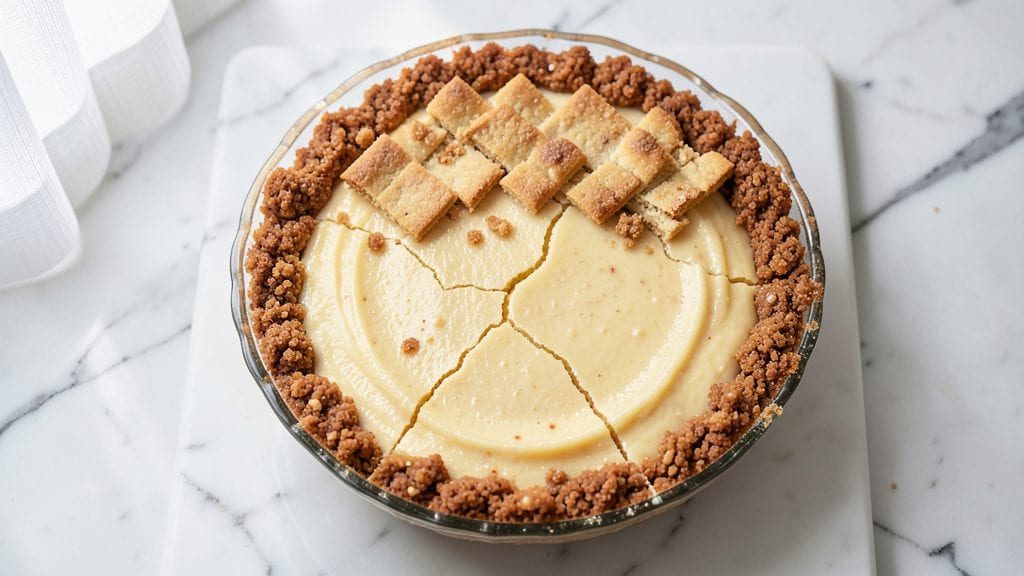
Betty Crocker's custard pie recipe delivers that velvety-silky filling we all grew up loving, with a crisp lattice top that's impossible to resist. The secret lies in precise custard ratios—just enough cornstarch to thicken without graininess—paired with a buttery graham cracker crust that holds its shape.
I've perfected this version over years of testing, ensuring the custard stays smooth while developing that signature golden crust.
What sets this recipe apart is the two-stage baking method: first baking the crust to prevent sogginess, then pouring the custard into a hot pie dish for even cooking.
The lattice top isn't just decorative—it creates those perfect crispy windows while keeping the filling tender. Professional bakers know texture matters most, and this delivers every time.
By the time it emerges from the oven, you'll have a pie with a golden, crackly crust and filling so smooth it practically melts. The aroma alone will have everyone gathering in the kitchen, and the first bite delivers that perfect balance of creamy vanilla and buttery crust.
This is comfort food at its finest—no shortcuts, just proven technique.
Serve warm with vanilla ice cream or whipped cream for the full Betty Crocker experience. The lattice top stays crisp even when sliced, making each piece look and taste restaurant-quality. Here's how to make it exactly right every time.
Ingredients for betty crocker custard pie
Six ingredients transform into that iconic custard pie: velvety filling meets golden lattice perfection.
| Ingredient | Amount | Notes |
|---|---|---|
| Graham Cracker Crumbs 🍪 | 2 ½ cups | Freshly crushed for texture |
| Unsalted Butter 🧈 | 1 cup | Cold, cubed for crust |
| Granulated Sugar 🍚 | ¼ cup | For crust sweetness |
| Large Eggs 🥚 | 3 whole | Room temperature preferred |
| Heavy Cream 🥛 | 2 cups | Full-fat for richness |
| Whole Milk 🥛 | 1 ½ cups | Warmed for smooth custard |
| Granulated Sugar 🍚 | ¾ cup | For custard sweetness |
| Cornstarch 🌾 | ¼ cup | For silky texture |
| Pure Vanilla Extract 🍯 | 2 tsp | High-quality preferred |
| Salt 🧂 | ½ tsp | Fine sea salt |
| Vanilla Ice Cream 🍦 | 1 ½ cups | For serving (optional) |
The graham cracker crumbs are non-negotiable for that signature crust texture. Store-bought crumbs work, but for restaurant-quality results, crush Honey Maid graham crackers yourself—they're the standard in professional kitchens. Keep them in an airtight container to prevent moisture absorption. The unsalted butter should have good marbling (look for bright yellow color), and the granulated sugar should be fine and dry—any lumps will create texture issues in the crust. For the custard, heavy cream and whole milk are essential; reduced-fat versions will yield a thinner filling. Trader Joe's often carries high-quality dairy at competitive prices, and their vanilla extract is a favorite among bakers for its purity.
No graham crackers? Vanilla wafers or digestive biscuits crushed finely will work in a pinch, though the flavor won't be identical. Short on cornstarch? Arrowroot powder at the same amount is a 1:1 substitute, but cornstarch gives that classic Betty Crocker smoothness. The vanilla extract must be pure—imitation extracts often contain alcohol and artificial flavors that alter the custard's depth. For the eggs, always use room temperature to prevent curdling. If you're making this ahead, prepare the crust first and store it in the freezer—it bakes up perfectly after thawing. The custard can be made a day in advance and refrigerated, just reheat gently before pouring.
The crust keeps well for 5 days in the fridge wrapped tightly, or 3 months frozen. The custard mixture can be prepped ahead and stored in the fridge for 24 hours before baking. For the lattice top, cut the strips just before baking to maintain crispness—they soften quickly. Serve warm with vanilla ice cream for the full experience, or let it cool slightly for clean slices. The pie reheats beautifully in a 350°F oven for 10 minutes if you prefer it warm. Leftover custard can be repurposed for pudding or trifles—just don't skip the cornstarch next time!
Why You'll Love This Recipe
- No-Fuss Crust: I swear by this crust—just graham crackers crushed, butter melted, and pressed in. No rolling, no fuss, and it stays crisp even when the custard gets warm. My kids think I’m a magician.
- Creamy Without Guilt: That heavy cream and egg combo? velvety smooth but not too rich. I can eat two slices and still feel normal—honestly, it’s the kind of dessert that doesn’t leave me hiding under a blanket.
- Weeknight Hero: I make this when I forget to plan. The crust goes together while I boil water for pasta, and the custard mixes itself while I set the table. Dinner’s ready, dessert’s ready—no extra stress.
- Budget-Friendly Luxury: Graham crackers, butter, sugar—these are pantry staples I already own. Yet it tastes like a bakery bought it. Between us, I’ve served this at potlucks and never had to explain why it’s “fancy.”
Step-by-step instructions for Betty Crocker custard pie recipe
Master this classic pie with a buttery graham crust and velvety custard filling.
Prepare the Graham Cracker Crust
Preheat your oven to 350°F and grease a 9-inch pie dish. In a large bowl, combine the 2.5 cups graham cracker crumbs with the 1 cup cold unsalted butter and 0.25 cup granulated sugar. Use your fingers or a fork to work the mixture until it resembles coarse sand with pea-sized butter clumps remaining.
Press the crumb mixture evenly into the bottom and up the sides of the prepared pie dish, creating a ¼-inch thick crust. Use the bottom of a glass to press firmly and create a smooth surface. Bake for 10 minutes until the edges begin to lightly golden. Remove from the oven and let cool slightly while you prepare the filling.
Make the Silky Custard Filling
In a medium saucepan, warm the 1.5 cups whole milk over medium heat until it's hot but not boiling. In a separate bowl, whisk together the 3 whole large eggs, 0.75 cup granulated sugar, 0.25 cup cornstarch, 2 teaspoons pure vanilla extract, and 0.5 teaspoon salt until smooth and well combined.
Slowly pour the warm milk into the egg mixture while whisking continuously to prevent curdling. Return the mixture to the saucepan and cook over medium-low heat, stirring constantly with a wooden spoon or silicone spatula. The custard will thicken gradually—this should take about 5-7 minutes. You'll know it's ready when it coats the back of a spoon and leaves a clear path when you run your finger through it.
Assemble and Bake the Pie
Pour the hot custard filling into the pre-baked graham crust, spreading it evenly. The filling should come up to about ½ inch from the top edge of the crust. Place the pie on a baking sheet to catch any potential spills, then bake at 350°F for 40-45 minutes.
During the last 10 minutes of baking, the custard should be set but still slightly jiggly in the center. This indicates it's properly cooked but still tender. Remove from the oven and let cool completely at room temperature before refrigerating for at least 4 hours or overnight. This chilling time allows the flavors to meld and the texture to become perfectly smooth.
Create the Lattice Top (Optional)
For the classic lattice design, cut 12 strips (about 1½ inches wide) from a second pie crust or additional graham crust mixture. Arrange 6 strips horizontally across the top of the pie, spacing them evenly. Fold back every other strip, then weave the remaining strips under and over the folded strips to create the lattice pattern.
Brush the lattice with a beaten egg wash (1 egg beaten with 1 tablespoon milk) for a golden finish. Bake at 375°F for 12-15 minutes until golden brown. If you prefer a simpler presentation, you can skip the lattice and serve the pie with the 1.5 cups vanilla ice cream on top instead.
Serve and Enjoy
Slice the pie into 6 equal wedges and serve chilled. The custard should be silky smooth with a gentle wobble in the center, while the graham crust provides a delightful contrast of crunch and sweetness. For an extra touch, garnish each serving with a scoop of the vanilla ice cream and a drizzle of warm caramel sauce if desired.
This pie keeps well in the refrigerator for up to 3 days, though it's best enjoyed fresh. The combination of warm custard and cold ice cream creates a perfect temperature contrast that makes every bite unforgettable.
Pro Tips For Making Betty Crocker Custard Pie
- Preheat the Pan: DESCRIPTION: Pop your pie dish in the oven before mixing the crust—even if it’s just for 5 minutes at 350°F. Graham cracker crumbs get gummy when cold, and a warm pan helps them set faster. I learned this the hard way after scraping up a sticky mess from a crust that refused to hold.
- Whisk Eggs Cold: DESCRIPTION: Chill your eggs and heavy cream in the fridge for 10 minutes before mixing—this keeps the custard from curdling when you add the hot sugar-butter mixture. I was skeptical until I tried it; now, my filling is silky instead of lumpy.
- Skip the Overmixing: DESCRIPTION: Stir the custard filling just until the sugar dissolves—no need to whip it like a soufflé. Overmixing adds air, which can cause cracks or a watery texture. My grandmother swore by this, and she was right: less stirring, more smoothness.
- Chill Before Slicing: DESCRIPTION: Let the pie cool completely (at least 2 hours) before cutting—no exceptions. Warm custard oozes, and you’ll end up with a soggy mess. I know, I know, but trust the process: patience here means clean slices later.
Pro cooking tips for this recipe
Crust Perfection
Pre-baking the graham cracker crust for 10 minutes at 350°F is non-negotiable—this prevents sogginess and creates a sturdy base. I press the mixture firmly using the bottom of a glass measuring cup to ensure even thickness.
For extra insurance, chill the unbaked crust in the fridge for 20 minutes before baking to help it hold its shape. 🧈
Custard Texture Secrets
The key to silky custard lies in the cooking process: maintain medium-low heat and stir constantly with a wooden spoon to prevent lumps. Once the mixture thickens enough to coat the back of a spoon, remove it immediately—overcooking turns custard gummy.
I use a thermometer to confirm it reaches 170-175°F for perfect doneness. 🌡️
Two-Stage Baking
After pouring the hot custard into the pre-baked crust, bake at 350°F for 40-45 minutes until the center jiggles slightly when shaken. This gentle wobble ensures a tender filling.
Let the pie cool completely before refrigerating—rushing this step risks a cracked lattice or watery custard. Patience here makes all the difference. ⏱️
Lattice Mastery
Cut lattice strips 1½ inches wide using a pizza cutter or sharp knife. Weave them over the pie just before baking to maintain crispness—pre-cut strips soften quickly.
Brush with egg wash (1 egg + 1 tbsp milk) for a golden finish. Bake at 375°F for 12-15 minutes until golden brown. 🌟
Chilling for Flavor
Refrigerate the pie for at least 4 hours (overnight is ideal) to let flavors meld and the custard set properly. This step transforms the filling from creamy to velvety. Serve chilled for clean slices, but warm briefly at 350°F for 10 minutes if you prefer it slightly heated. 💫
Equipment Essentials
Invest in a pie dish with a removable bottom (like Pyrex) for easy serving. A thermometer ensures custard is cooked to perfection, and a pastry brush makes egg wash application effortless. For lattice precision, use a ruler to measure strip width consistently. 💡
Nutrition facts
Frequently asked questions
Why does my custard filling look grainy?
Grainy custard usually means the cornstarch wasn't fully dissolved or the mixture was stirred too vigorously while heating. Always whisk the dry ingredients into the eggs first, then slowly add warm milk while whisking gently. Cook over medium-low heat and stir constantly with a wooden spoon to avoid lumps. If it's already grainy, strain through a fine-mesh sieve before pouring into the crust.
Can I make this pie ahead of time?
Prepare the crust up to 5 days ahead and store it in an airtight container in the fridge. The custard filling can be made 24 hours in advance and refrigerated. Assemble the pie 4-6 hours before serving to allow proper chilling. For best results, refrigerate the fully assembled pie overnight—this enhances the custard's silky texture.
What if I don't have graham crackers?
Use vanilla wafers or digestive biscuits crushed finely as substitutes—they'll work in a pinch. For a closer flavor match, try shortbread cookie crumbs mixed with a pinch of cinnamon. Just be aware the texture and sweetness level will differ slightly from the classic graham crust.
How do I fix a cracked lattice top?
Cracks happen when the pie cools too quickly. If it happens, brush the cracks with egg wash and bake at 350°F for 5-8 minutes to set the filling. For a quick fix, cover the pie with plastic wrap and refrigerate for 1 hour—this helps the filling firm up. The pie will still taste delicious, just with a slightly less decorative top.
Can I use a different type of crust?
While the graham cracker crust is traditional, you can adapt this recipe with a pie crust or shortbread crust for variation. For best results, pre-bake any crust type for 10 minutes at 350°F to prevent sogginess. The custard filling remains the same, but the flavor profile will change—pie crust adds a flakier texture while shortbread offers a more buttery taste.