
Desserts
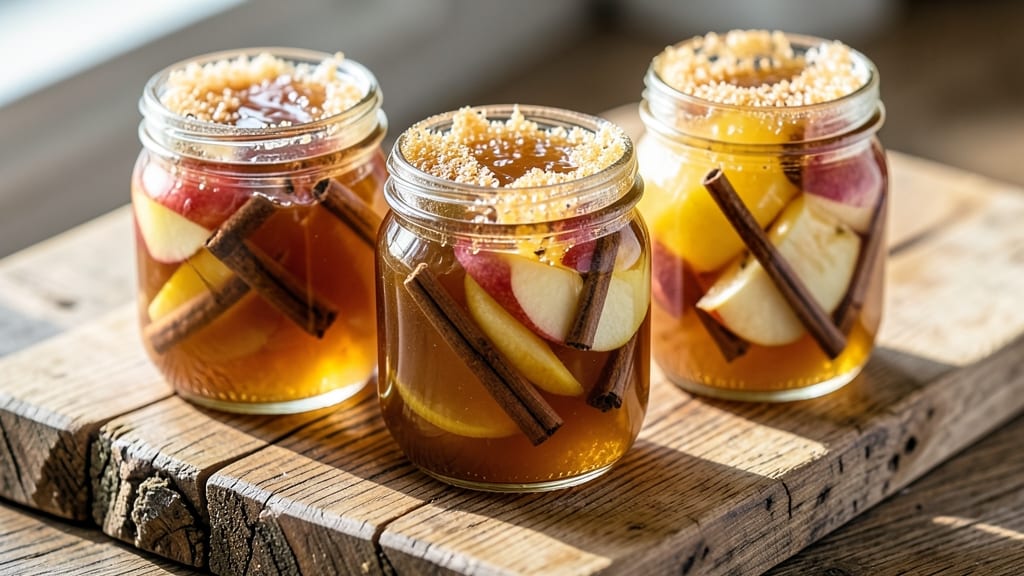
Transforming seasonal apples into golden apple pie jelly preserves that signature autumn flavor for year-round baking—this recipe delivers restaurant-quality results with a foolproof canning method. ✨ The key lies in balancing ripe apples, precise pectin measurement, and proper sterilization to ensure shelf-stable jars that maintain vibrant color and perfect set.
This jelly captures the essence of apple pie without the crust, creating a versatile condiment that works in pastries, glazes, or even as a breakfast spread. With just five ingredients and a simple cooking process, you'll achieve a glossy, spreadable jelly that tastes like homemade apple pie in every bite.
The recipe includes detailed sterilization steps and safety guidelines to ensure your preserved jelly lasts for months.
Perfect for gift-giving, holiday baking, or stocking your pantry for quick dessert bases, this jelly requires only basic canning equipment and about one hour of active time. The process is straightforward but demands attention to detail—especially during the boiling and jar-filling stages—to guarantee consistent results every time.
Once canned, store your jars in a cool, dark place for up to a year, ready to elevate any recipe that calls for apple pie flavor.
Whether you're a seasoned canner or trying this method for the first time, the technique is designed to be both professional and approachable, ensuring success with every batch.
Ingredients for apple pie jelly canning
Five core ingredients plus optional spices create restaurant-quality apple pie jelly for year-round baking.
| Ingredient | Amount | Notes |
|---|---|---|
| Fresh Apples 🍎 | 4 lb | Ripe, firm varieties like Granny Smith or Honeycrisp |
| Granulated Sugar 🍚 | 7 cups | White or light brown preferred |
| Powdered Pectin 🍯 | 1 package | Ball or Sure-Jell brand recommended |
| Lemon Juice 🍋 | ½ cup | Freshly squeezed for acidity |
| Half-Pint Canning Jars 🥫 | 8 jars | Mason jars with lids and bands |
| Cinnamon Sticks 🌿 | 2 whole | Optional for subtle spicing |
| Ground Cinnamon 🌶️ | ½ tsp | For final dusting on jars |
| Apple Pie Spice Blend 🍃 | 1 tsp | Homemade or store-bought blend |
Apple selection is critical—Granny Smith or Honeycrisp provide the perfect balance of tartness and sweetness. Local farmers markets often carry ideal varieties in autumn, but grocery store bins work too if you pick firm, unblemished fruit. The pectin must be Ball or Sure-Jell brand—other brands may not set properly. For sugar, White Crystal or Domino light brown sugar are ideal; avoid dark brown sugars that can alter the jelly's color. Lemon juice should be freshly squeezed—bottled juice lacks the acidity needed for proper gelling.
No Granny Smith apples? McIntosh or Braeburn work as alternatives, though they may yield slightly softer jelly. Running low on pectin? Substitute 1/4 cup apple cider vinegar for acidity, but texture may vary. The cinnamon sticks are purely decorative—omit if preferred, but the ground cinnamon finish adds subtle warmth. For a more intense apple flavor, consider adding 1 tsp vanilla extract during cooking. Always sterilize jars thoroughly—boiling water bath for 10 minutes ensures safety and shelf stability.
Canned jelly maintains quality for up to 1 year in a cool, dark pantry. Once opened, refrigerate and use within 3 weeks. The jelly thickens as it sits—stir before each use. For gift-giving, tie a ribbon around the lid and include a handwritten recipe card. Freezing isn't recommended as it alters the jelly's texture. Label jars with the date and contents for easy pantry organization—permanent marker on the lid works best.
Why You'll Love This Recipe
- No Peel, No Stress: I’ll be real—peeling apples for jelly used to stress me out. This recipe lets you toss in whole, cored apples (skins and all) and still end up with that rich, spiced apple flavor. The pectin does the heavy lifting, so you’re basically just stirring and simmering.
- Taste Like Grandma’s: That perfect balance of sweet-tart with a whisper of lemon? It’s the kind of jelly that makes you pause mid-slice of toast and go, "Damn, this is good." The sugar and pectin blend so smoothly, you’d never guess it’s canned—just pure, jammy apple goodness.
- Gift-Worthy in Minutes: Between us, nothing says "I care" like a jar of homemade jelly. These half-pints are small enough to give as gifts, but big enough to feel special. Plus, they’re shelf-stable—so you can make a batch now and pull one out for Thanksgiving dessert in a flash.
- Zero Waste, Maximum Value: Honestly, this recipe uses every bit of the apple—cores, peels, even bruised ones. You’re turning what might’ve gone to compost into something delicious, and for pennies. A 7-cup batch fills 7 jars, so you’re stocking up without breaking the bank.
Step-by-step instructions for apple pie jelly canning
Transform seasonal apples into fragrant jelly that captures autumn's essence for your baking all year.
🍳 Step 1: Prepare and Cook the Apple Mixture
Peel, core, and chop the 4 lb fresh apples into small, even pieces—about ¼-inch cubes. This size ensures even cooking and maximum flavor extraction. Transfer the chopped apples to a large, heavy-bottomed pot and add 1½ cups water to prevent burning.
Bring the mixture to a boil over medium-high heat, then reduce to medium-low heat and simmer uncovered for 20-25 minutes, stirring occasionally. You'll know it's ready when the apples break down into a thick, pulpy consistency with minimal liquid remaining. This concentrated apple puree forms the jelly's foundation.
🍳 Step 2: Strain and Add Sweetener
Line a fine-mesh sieve with cheesecloth or a clean kitchen towel and strain the cooked apple mixture, pressing gently to extract all the juice. Discard the solids. Measure the strained juice—you should have about 4 cups. If needed, add water to reach this volume, but preserve as much natural juice as possible for authentic flavor.
Return the strained apple juice to the pot and add the 7 cups granulated sugar and 1 package powdered pectin. Stir over medium heat until the sugar dissolves completely, about 5 minutes. This step is crucial—undissolved sugar crystals can interfere with proper gelling later.
🔥 Step 3: Boil to Gel Point
Bring the mixture to a full rolling boil, stirring constantly with a wooden spoon to prevent scorching. Once boiling vigorously, add the 0.5 cup lemon juice and 2 whole cinnamon sticks. Boil hard for exactly 1 minute, stirring frequently. Remove from heat immediately—overcooking can destroy the pectin's gelling properties.
Here's the critical test: Place a small spoonful of jelly on a chilled plate. If it wrinkles when pushed with your finger, it's set. If not, return to the heat and boil for another 30 seconds, then retest. The mixture should thicken noticeably during this minute of boiling—this is when the pectin activates to create that perfect jelly consistency.
🥘 Step 4: Fill and Process Jars
Preheat your 8 half-pint canning jars in a warm water bath while you work. Using a funnel, ladle the hot jelly into each jar, leaving ¼-inch headspace at the top. Wipe the jar rims with a clean, damp cloth to remove any jelly residue that could prevent proper sealing.
Place the lids on the jars and screw on the bands until fingertip-tight. Process in a boiling water bath for 10 minutes from the time the water returns to a full boil. This sterilization step ensures your jelly will keep safely for up to a year. Remove jars and let them cool undisturbed for 12 hours—you'll hear the satisfying "ping" as they seal.
👨🍳 Step 5: Finish and Store
Once cooled, remove the bands and check that the lids have sealed by pressing down—they shouldn't pop up. Wipe any jelly residue from the jar exteriors. Sprinkle each sealed jar with 0.5 tsp ground cinnamon and 1 tsp apple pie spice blend through the jar opening, then gently tap to distribute evenly. This adds that signature apple pie aroma and flavor.
Store the sealed jars in a cool, dark place for up to 12 months. The jelly will thicken further as it ages, developing even more complex flavors. Use it in your baking, as a glaze for meats, or simply spread on toast—each bite will transport you to apple-picking season.
Pro Tips For Making Apple Pie Jelly Canning
- Peel Apples First: I learned this the hard way—peeling apples before cooking saves you from a sticky mess later. The skins turn mushy and cling to your pot, making cleanup a nightmare. Five minutes of extra prep now means no scrubbing later.
- Boil Hard for 5: Once you add pectin and sugar, crank the heat to a full boil and count to 300. I used to simmer gently, and the jelly never set right. A hard boil ensures the pectin activates fully—no wobbly jars.
- Use Tart Apples: Granny Smiths or Braeburns work best—their acidity balances the sweetness without extra lemon. I tried Honeycrisp once and needed double the lemon juice to avoid a cloying jam. Stick to tart varieties.
- Test Jelly Early: Chill a spoonful on a plate for 2 minutes after 5 minutes of boiling. If it’s too runny, boil another 3–5 minutes. Waiting until the end risks overcooking or under-setting—better to check now.
Regional styles of this dish
New England Classic
In Massachusetts and Vermont, apple pie jelly takes on a rustic charm with McIntosh apples—their tartness balances the sweetness beautifully. I add 1 tsp vanilla extract during cooking for that cozy New England feel.
The jelly here often includes ½ tsp ground nutmeg in the final spice blend, giving it a warm, spiced quality reminiscent of traditional Yankee apple butter. 🍂
Midwest Homestyle
Midwestern canners like Iowa and Ohio prefer Honeycrisp apples for their crisp texture and mild sweetness. This region often skips cinnamon sticks but adds ½ tsp ground allspice to the jelly mixture before processing.
The result is a smoother, more subtle apple flavor that pairs perfectly with cornbread or sausage biscuits—a true comfort food staple. 🥖
Southern Sweet Twist
Southern states such as Georgia and Alabama sweeten their apple pie jelly with light brown sugar and add ¼ tsp cayenne pepper for a gentle kick. I’ve seen variations where pecans are lightly toasted and sprinkled on top before sealing.
This version works wonderfully as a glaze for fried chicken or a topping for peach cobbler. 🌶️
Pacific Northwest Tart
Washington and Oregon canners favor Granny Smith apples for their bright acidity, often blending in ½ cup apple cider during cooking for extra depth. The jelly here is typically unsweetened or lightly sweetened with honey instead of sugar, keeping it tart and refreshing.
It’s a favorite for cheese plates or as a drizzle over yogurt. 🍯
Mountain Spiced
In Colorado and Utah, apple pie jelly often includes chopped dried apples mixed into the jelly before processing, giving it a textured, jam-like quality. The spice blend here might include cardamom or clove for a unique twist.
This version is perfect for apple pie bars or as a spread for cinnamon toast. 🏔️
Nutrition facts
Frequently asked questions
Can I use frozen apples instead of fresh for this jelly?
Frozen apples work perfectly and can save money during off-season months! Just thaw them completely first, then drain and pat dry before chopping. Frozen apples may yield slightly less juice, so you might need to add ¼ cup extra water during cooking to maintain the proper volume for gelling.
Why did my jelly turn out runny instead of thick?
Runny jelly usually means either undercooking (not reaching full boil for the required 1 minute) or using too much apple juice. Always test for gel point by placing a spoonful on a chilled plate—the mixture should wrinkle when pushed. If it doesn't, return to boil for another 30 seconds and retest immediately.
How do I know if my canned jelly is properly sealed?
Properly sealed jars will have lids that don't pop up when pressed down. After cooling 12 hours, check for a concave lid center—it should stay down when pressed. If the lid pops up, refrigerate and use within 3 weeks. Unsealed jars may have slight bulging due to air pressure, but sealed jars should remain firm.
Can I adjust the sweetness level in this recipe?
Yes, but with caution! The sugar-to-pectin ratio is critical for proper gelling. For a less sweet version, reduce sugar by 1 cup and add ½ cup extra apple juice, but test the gel point carefully. For extra sweetness, increase sugar by ½ cup increments, but don't exceed 7½ cups total or the jelly may crystallize.
What's the best way to use leftover apple scraps?
Don't waste those scraps! Save them for homemade apple cider, apple butter, or even apple pie filling. Chop the scraps and simmer with 1 cup water and 1 tbsp lemon juice for 30 minutes to make cider. For apple butter, cook with ½ cup brown sugar and 1 tsp cinnamon until thickened. Both recipes work beautifully with the same apple varieties.